Wetland Caves. A Discovery Pavilion in the Longyou Wetlands
湿地洞窟配套驿站

Credits
Location: Longyou, Quzhou, Zhejiang, China
Status: Completed Nov, 2023
GFA: 85sqm
Architectural & Interior Design Consultant: Studio 10
Principal-in-charge: Shi Zhou
Design Team: Jingqi Qiu, Liuqing Liu, Jiaxiao Bao (Project Assistant), Yu Cai, Mengqi Zhang, Ruiyu Zhang, Jingwei Zhang, Jiaying Huang, Bin Tang(Intern), Zewei Feng(Intern), Chunyu Li(Intern)
Client: Longyou County People’s Government
Organizers: Longyou Hu Construction and Management Center, Longyou County Transportation Investment Group Co., Ltd.
Co-organizers: China Academy of Urban Planning & Design, Shanghai Fengyuzhu Culture & Tech Co., LTD, Shanghai Bilibili Technology Co., LTD
Project Managers: Tianlu Zhou, Ningjue Lv
Special Consultant: Xiaoling Ji
Structural Design Consultant: Tao Qu
Construction Drawing Team: Zhejiang Huichuang Design Group Co., Ltd.
Structural Design Consultant:Shanghai Jingdao Bamboo Construction Design co. LTD.
Contractor: Zhejiang Yuanjing Construction Co., Ltd.
Photos by: Chao Zhang, Guowei Liu
项目信息
项目地址:中国浙江省衢州市龙游县
完工时间:2023年11月
建筑面积:85平方米
建筑及室内设计团队: Studio 10
主管合伙人:周实
设计团队:邱婧祺、刘柳青、包嘉晓(项目助理)、蔡瑜、张孟琦、张瑞羽、张经纬、黄嘉颖、唐玢(实习)、俸泽为(实习)、李春雨(实习)
主办单位:龙游县人民政府
承办单位:龙游县龙游瀫建设管理中心,龙游县交通投资集团有限公司
联合发起方:中国城市规划设计研究院,上海风语筑文化科技股份有限公司,上海哔哩哔哩科技有限公司
执行负责人:周天璐、吕凝珏
特别顾问:季晓玲
结构设计顾问:屈涛
施工图设计:浙江汇创设计集团有限公司
竹结构顾问:上海境道原竹建筑设计工程有限公司
施工团队:浙江远境建设有限公司
摄影师:张超、刘国威
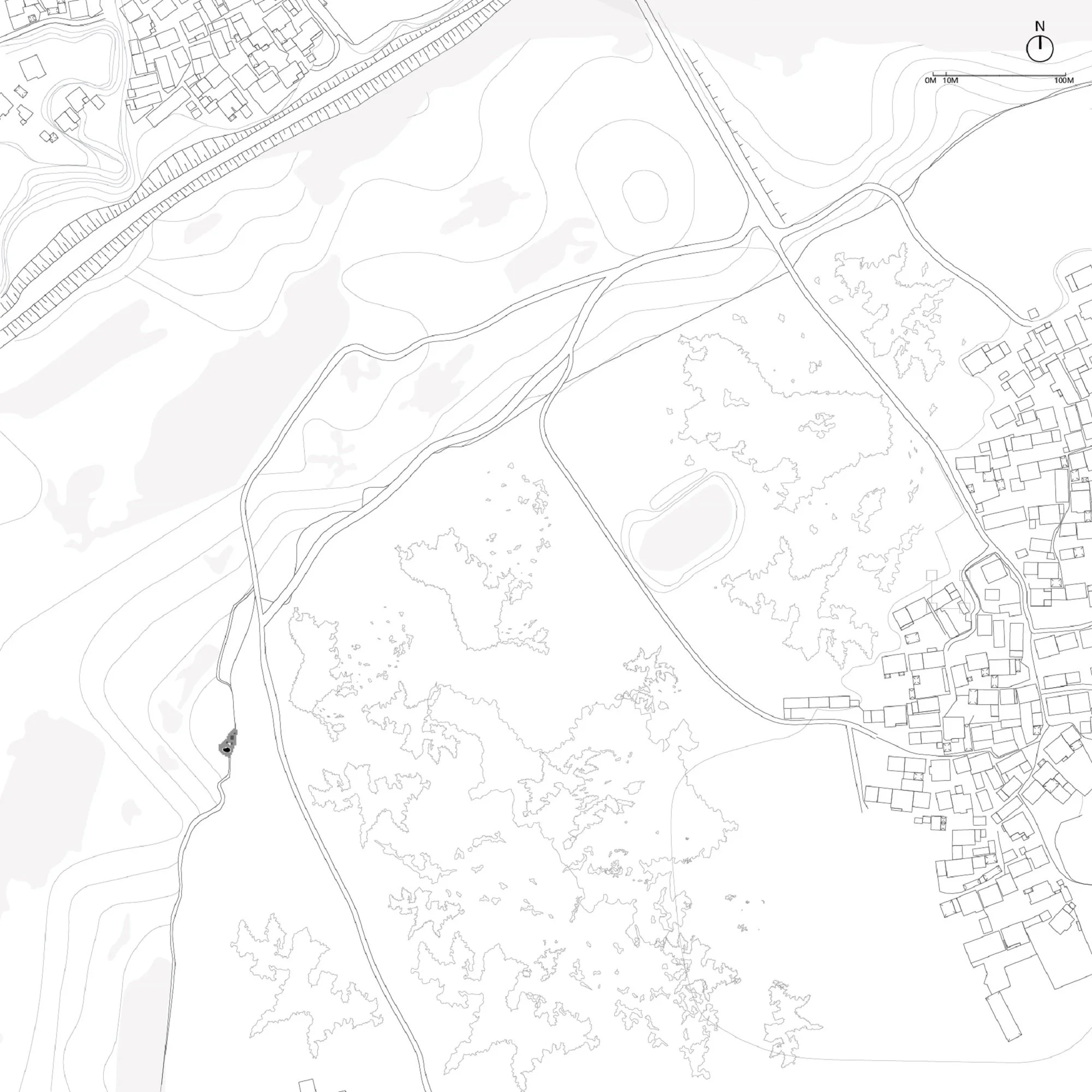
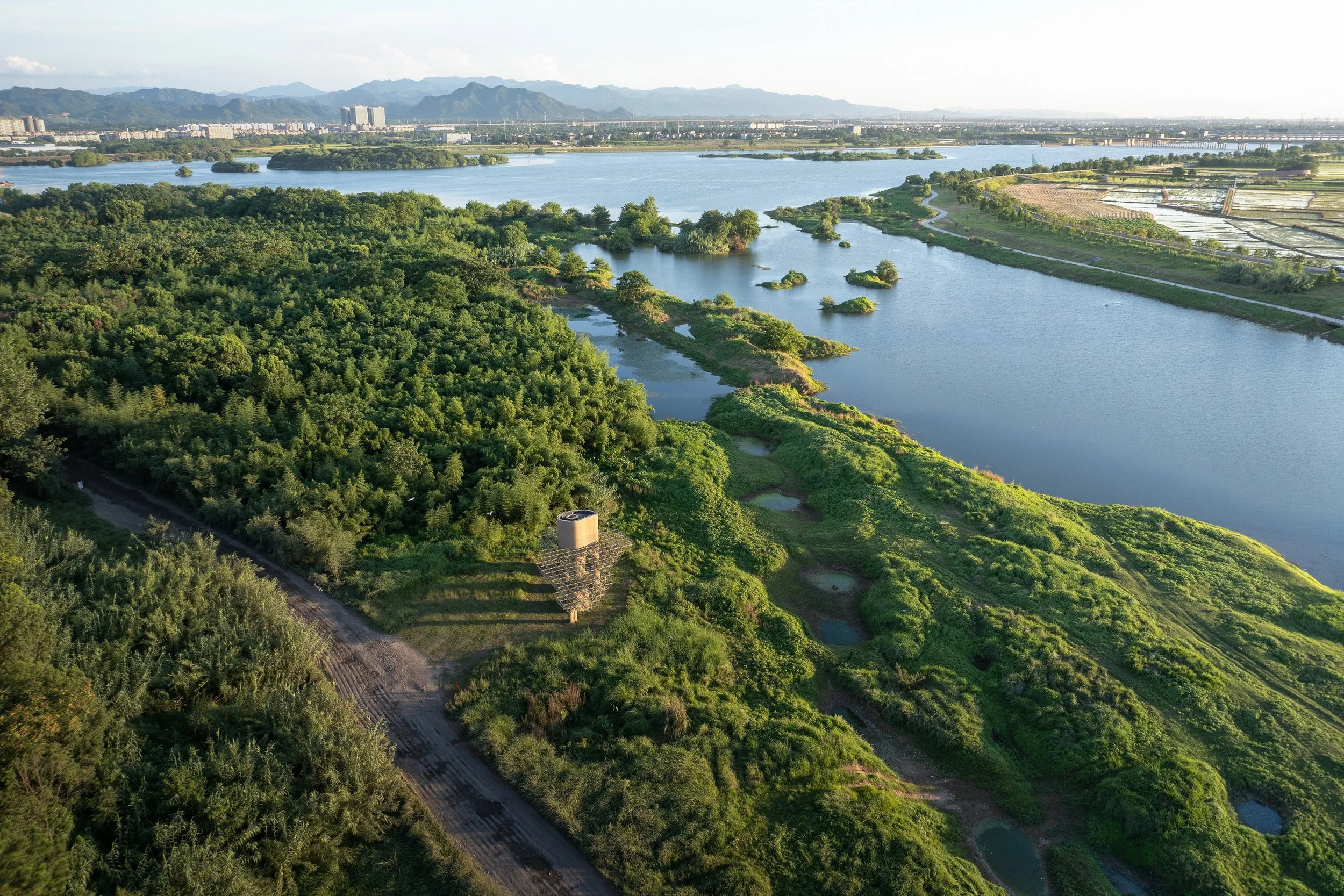
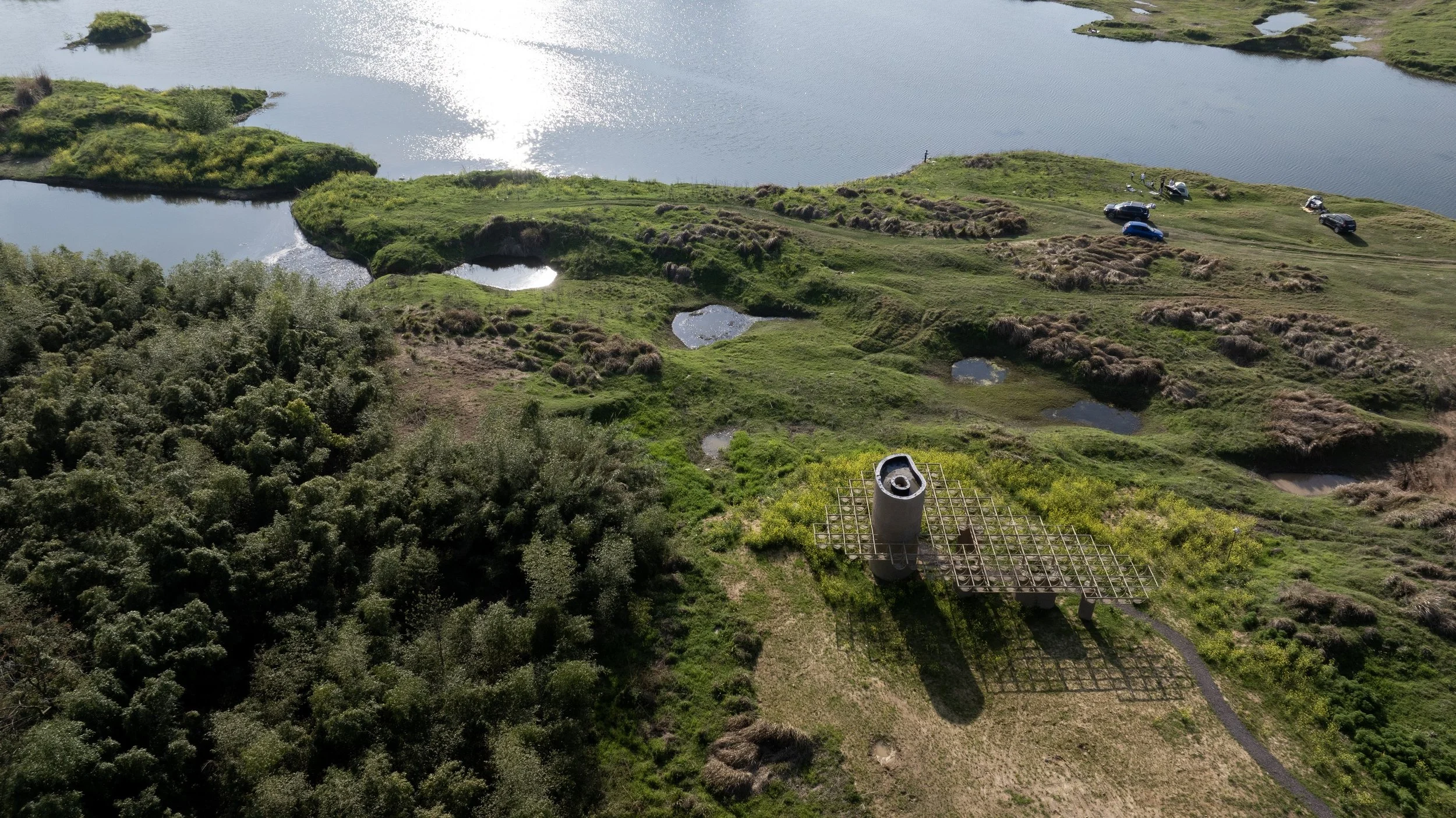
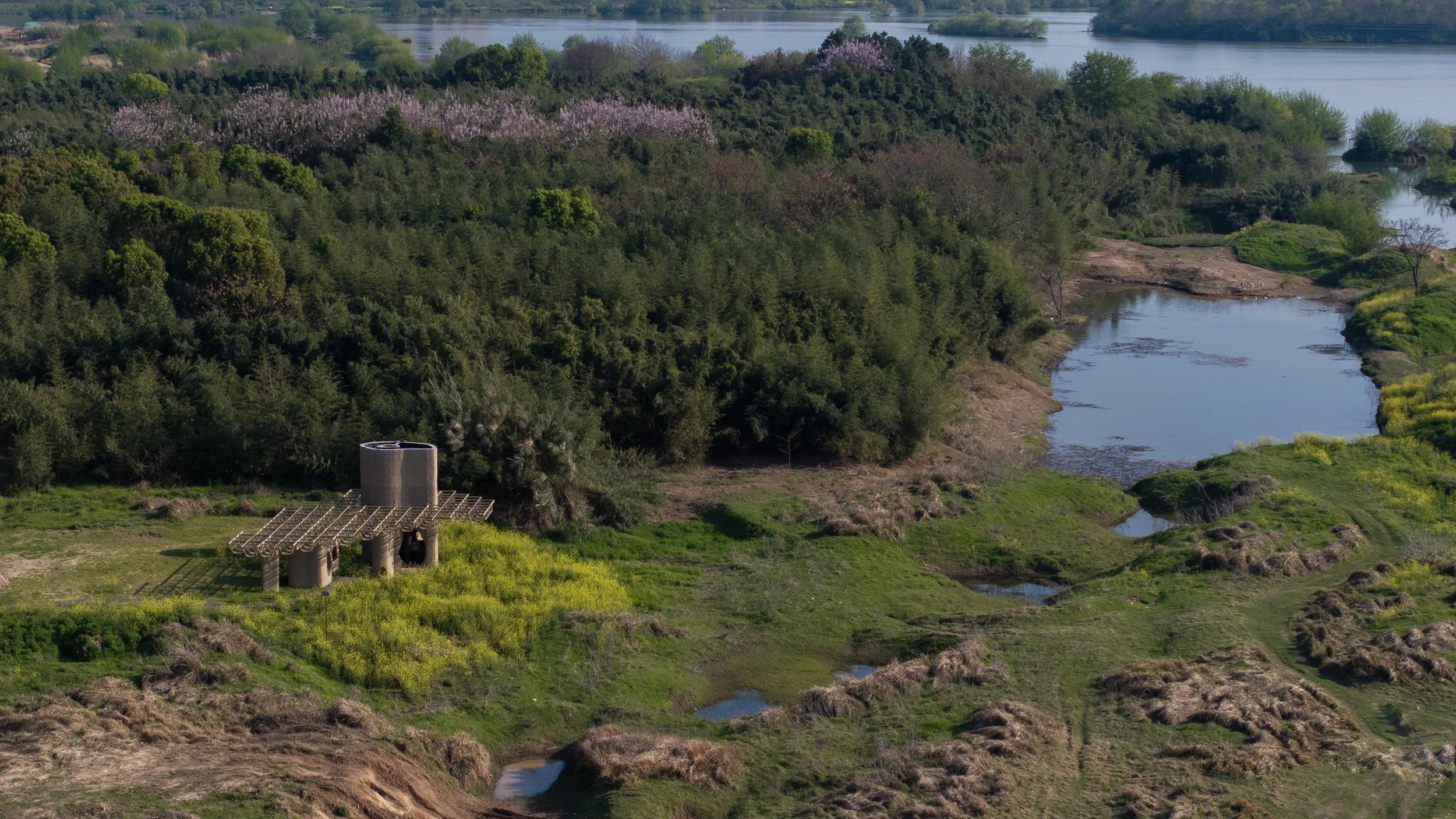
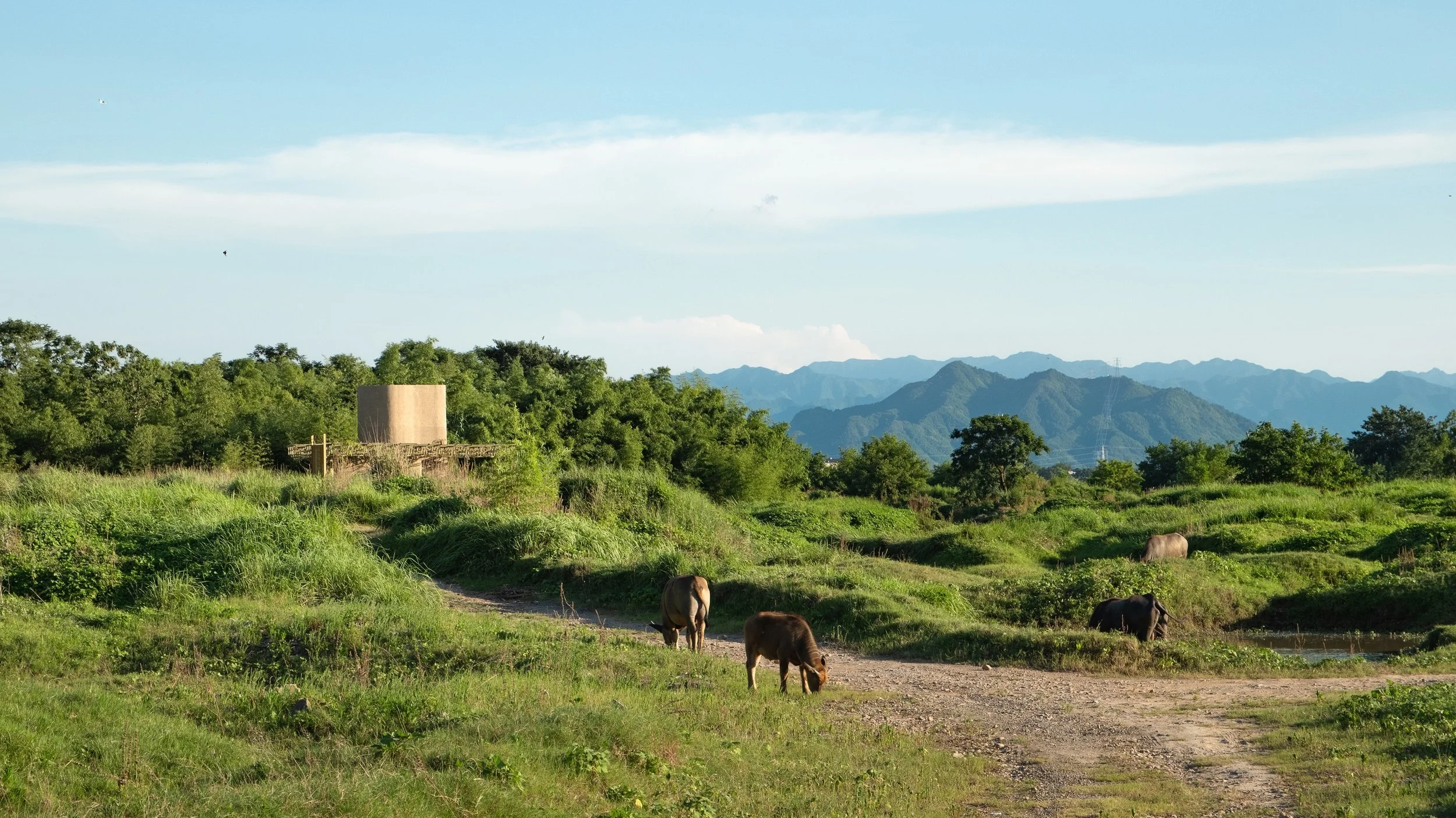
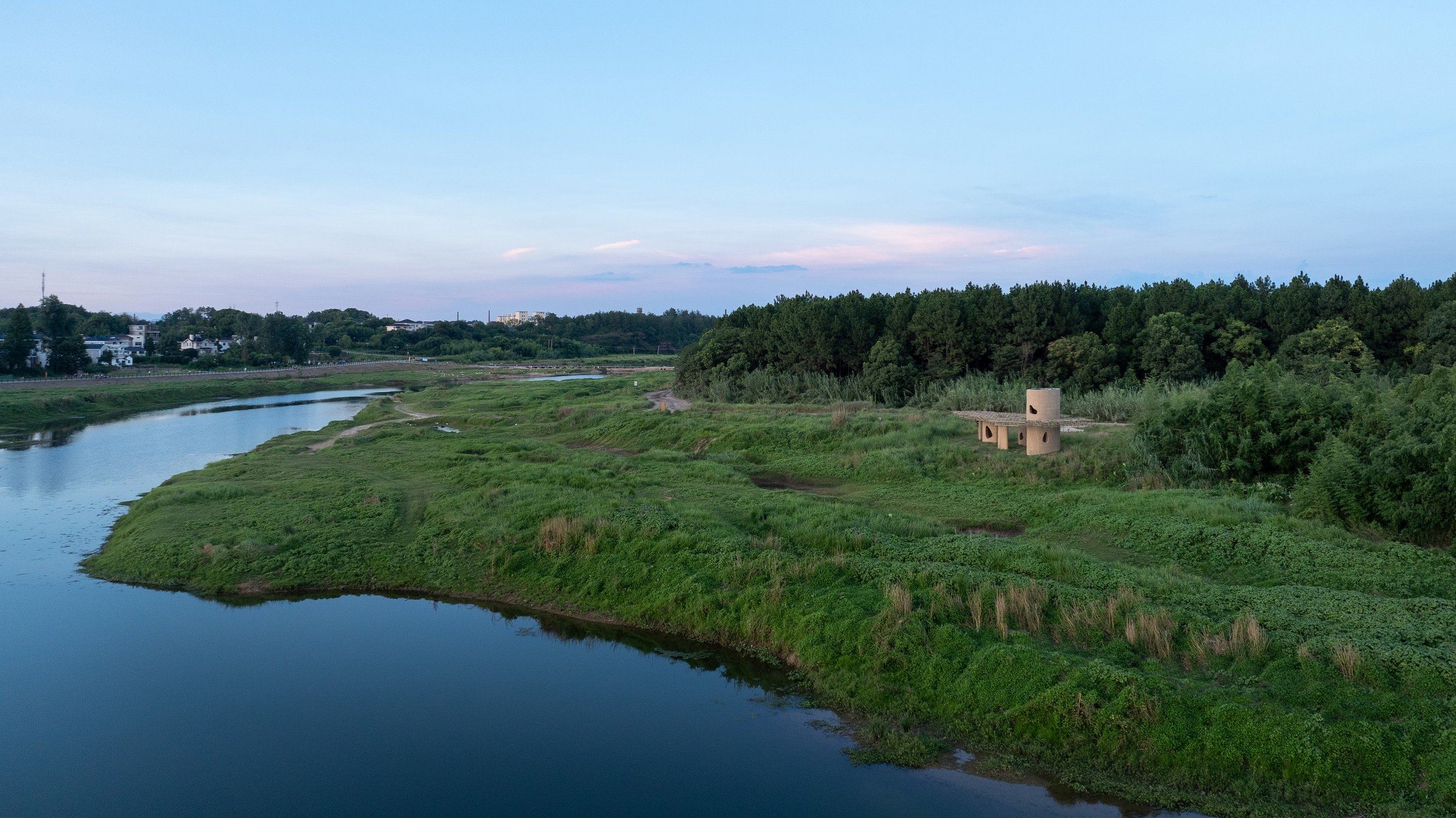
The Wetland Caves Pavilion is located along the shoreline of Chuanchang Island in Xiaonanhu Town, Longyou County, Quzhou City. The unique wetland terrain surrounding the site has been shaped by long-term erosion and sedimentation from the Qu River, nurturing a rich ecosystem of plants and animals. The extensive mudflat meadows along the shoreline offer diverse conditions for experiencing the natural wetland landscape and ecological environment. Scattered across the shore are ancient cave sites, where man-made structures blend organically with nature, exuding a sense of history and mystery.
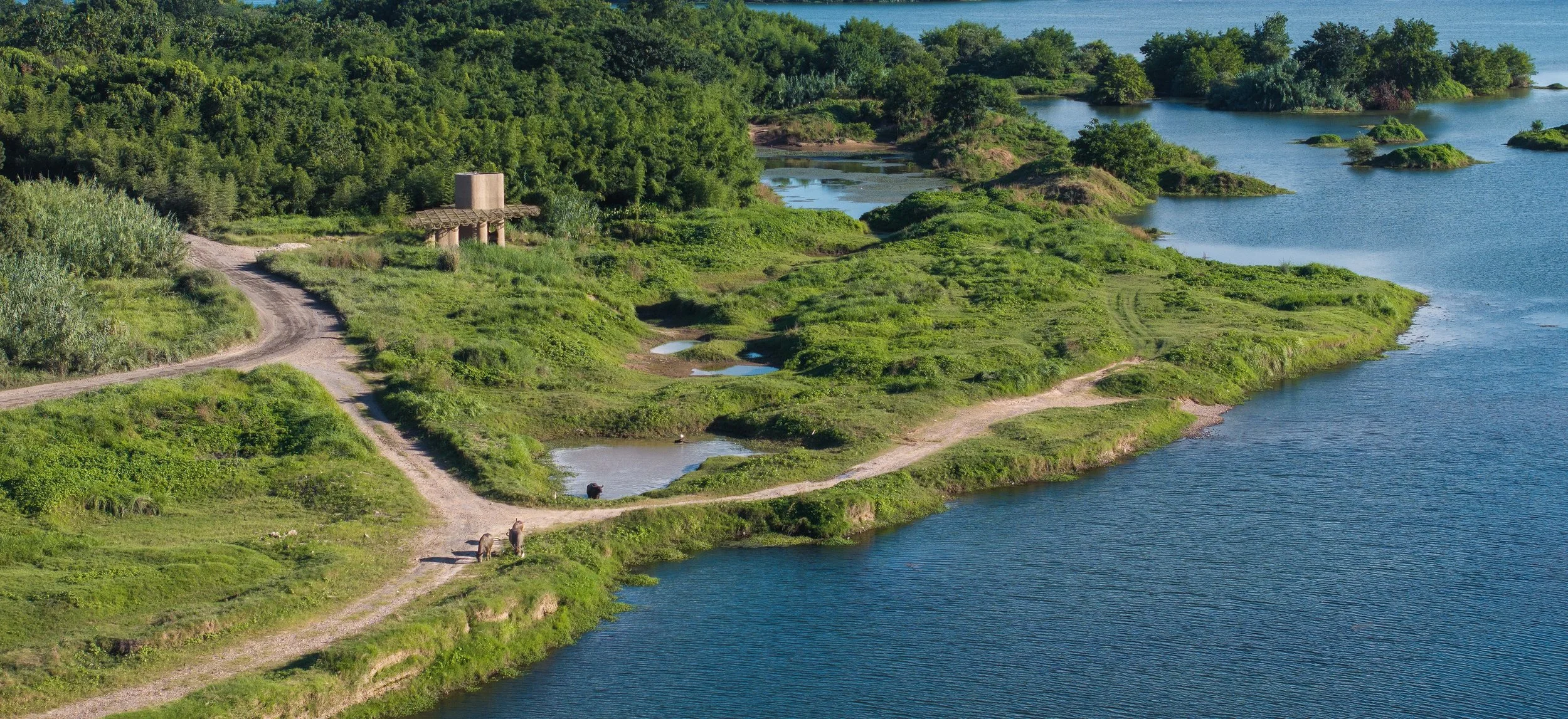
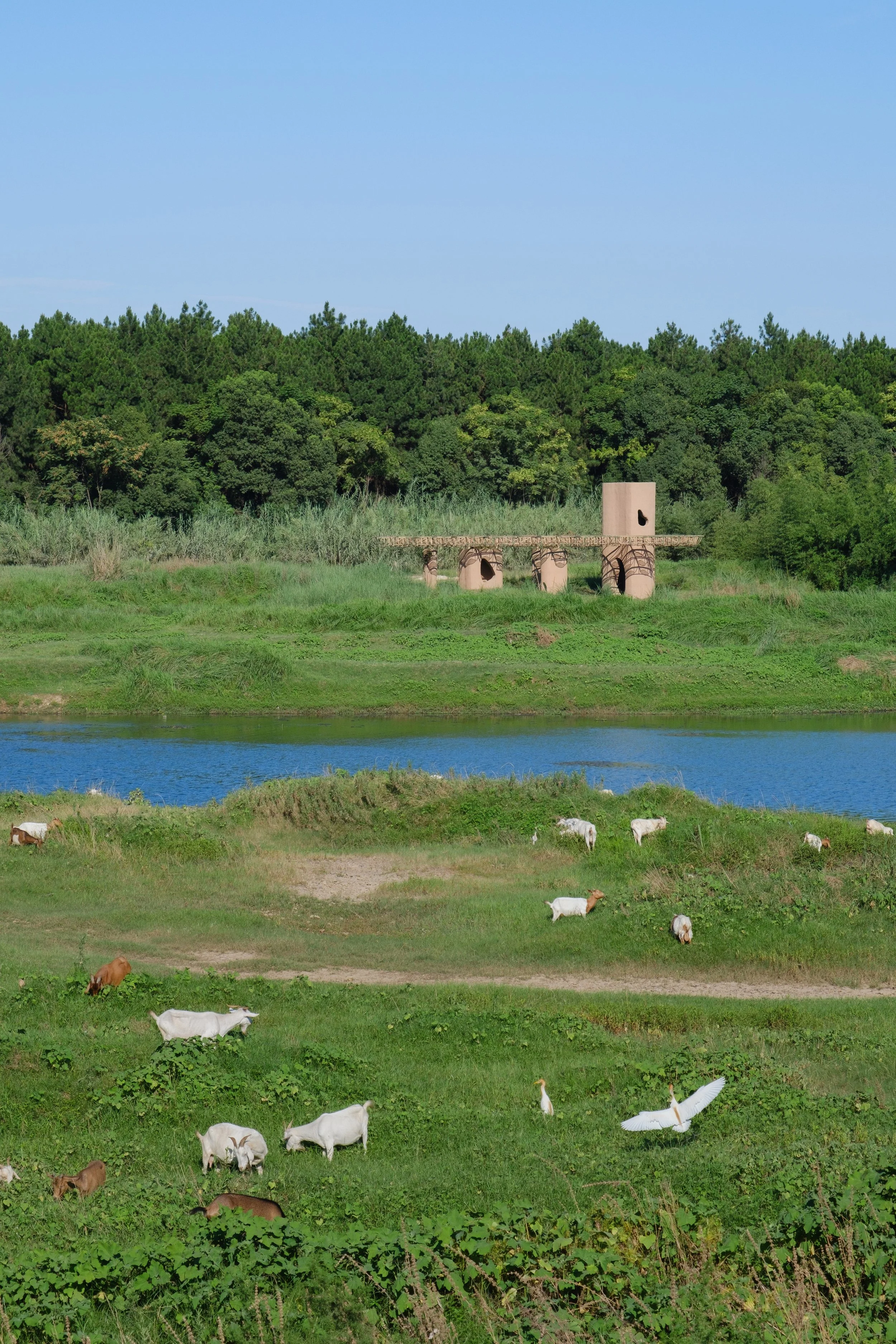
The campsite is situated on Chuanchang Island in Longyou County. The Qu River has carved out a distinctive wetland environment around the island, fostering a rich variety of flora and fauna. The island's dense forest and extensive shoreline meadows offer diverse sites for camping. The project aims to bridge the boundary between design creation and nature conservation, addressing the needs and visions of both visitors and island residents. Serving as a buffer zone between the river and the island, the site floods annually during the rainy season, with water levels receding to reveal sediment that reshapes the terrain until vegetation reclaims the land, forming new wetland meadows. This cycle of change showcases the elegance, rigor, and poetry of natural laws, captivating those who witness it. Throughout this process, the wetland supports a diverse ecosystem, with dense vegetation and wildlife, including both wild and domesticated birds and animals that forage, play, and rest here.
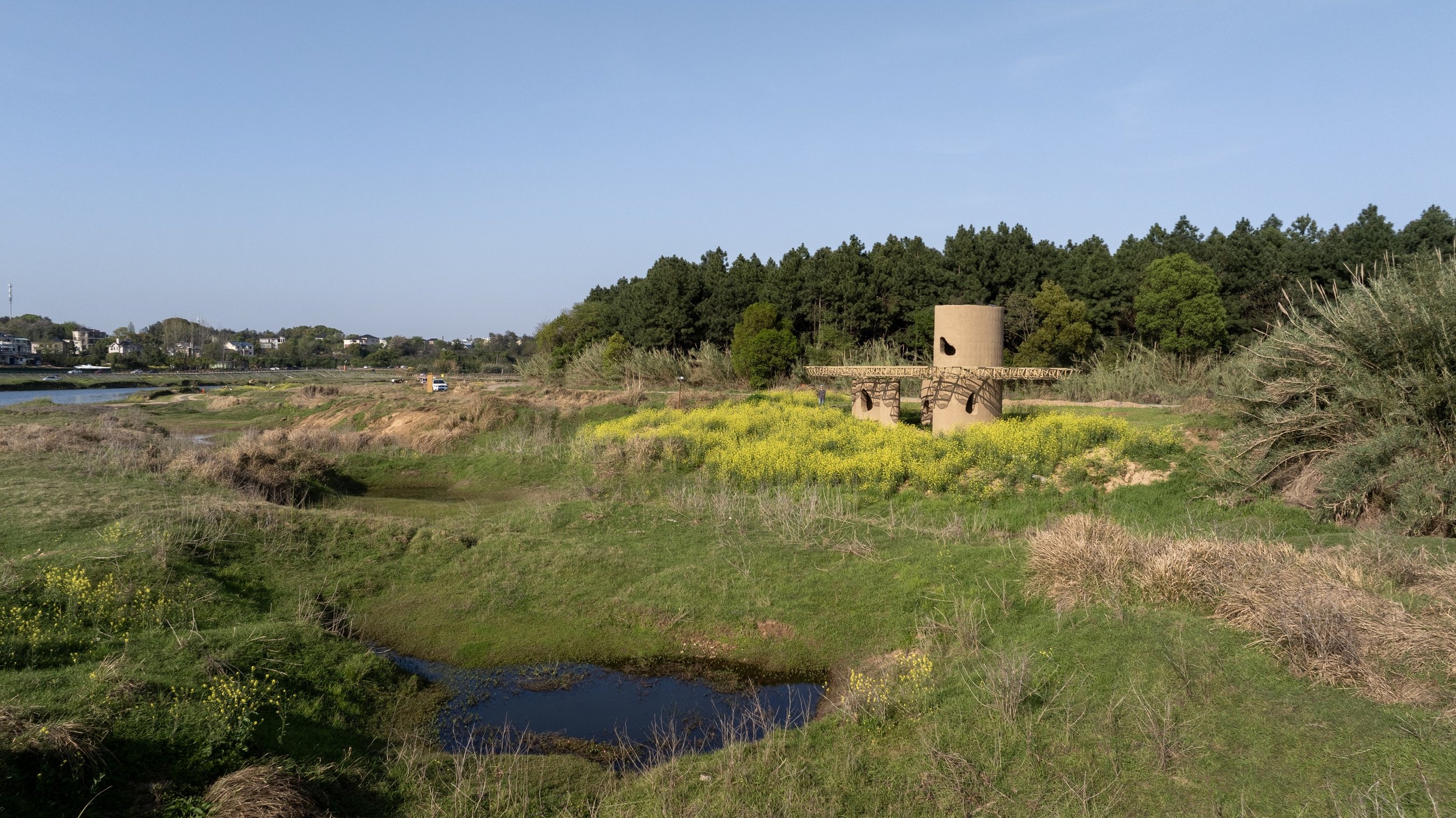
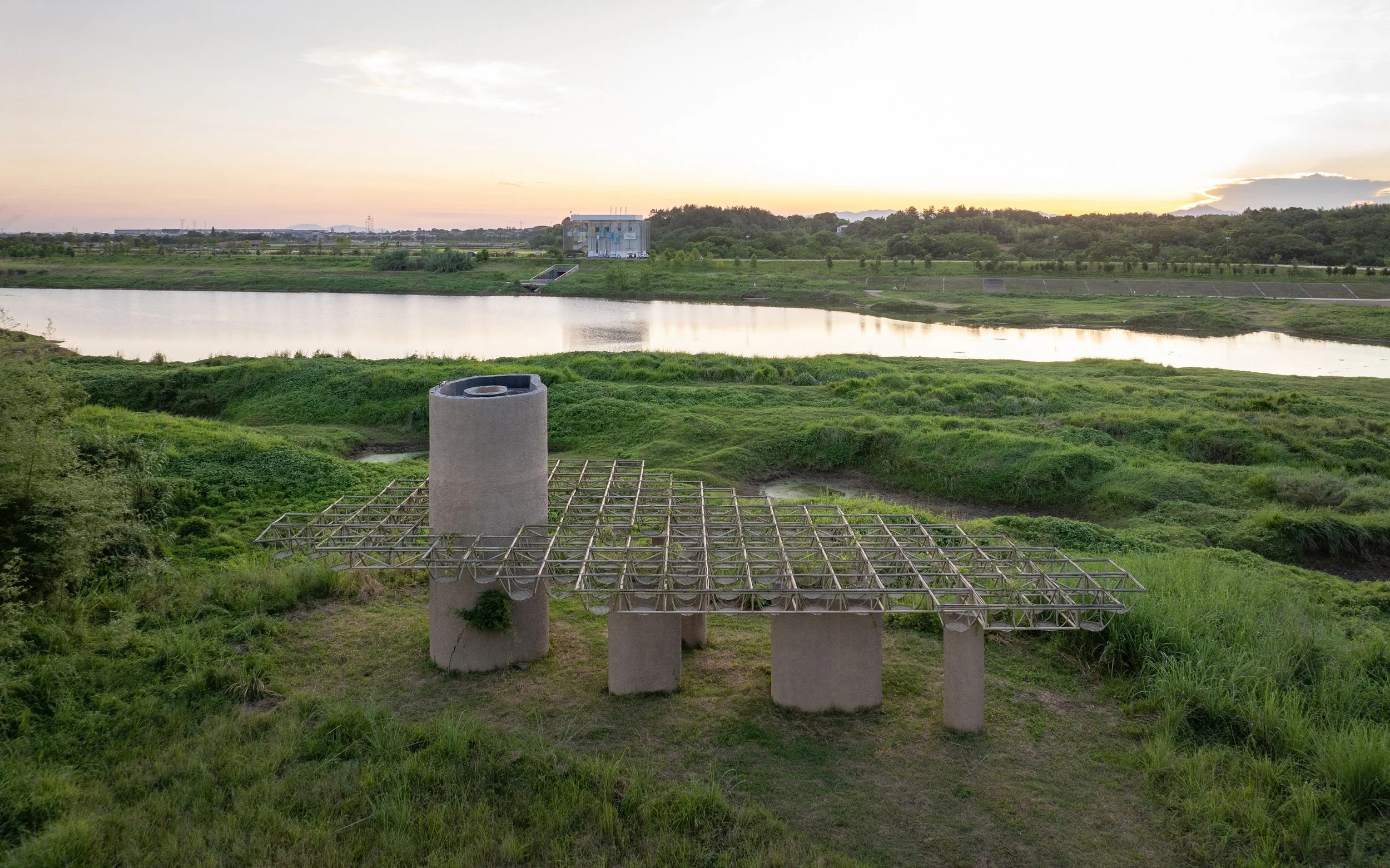
In this project, we explore the boundaries between water and soil, as well as the subtle interactions between natural systems and architecture. In this ambiguous zone between water and land, where boundaries constantly shift, we have designed an abstract artificial cave to provide shelter for animals, a place for villagers to rest and access water, and a space for visitors and campers to observe and experience the wetlands.
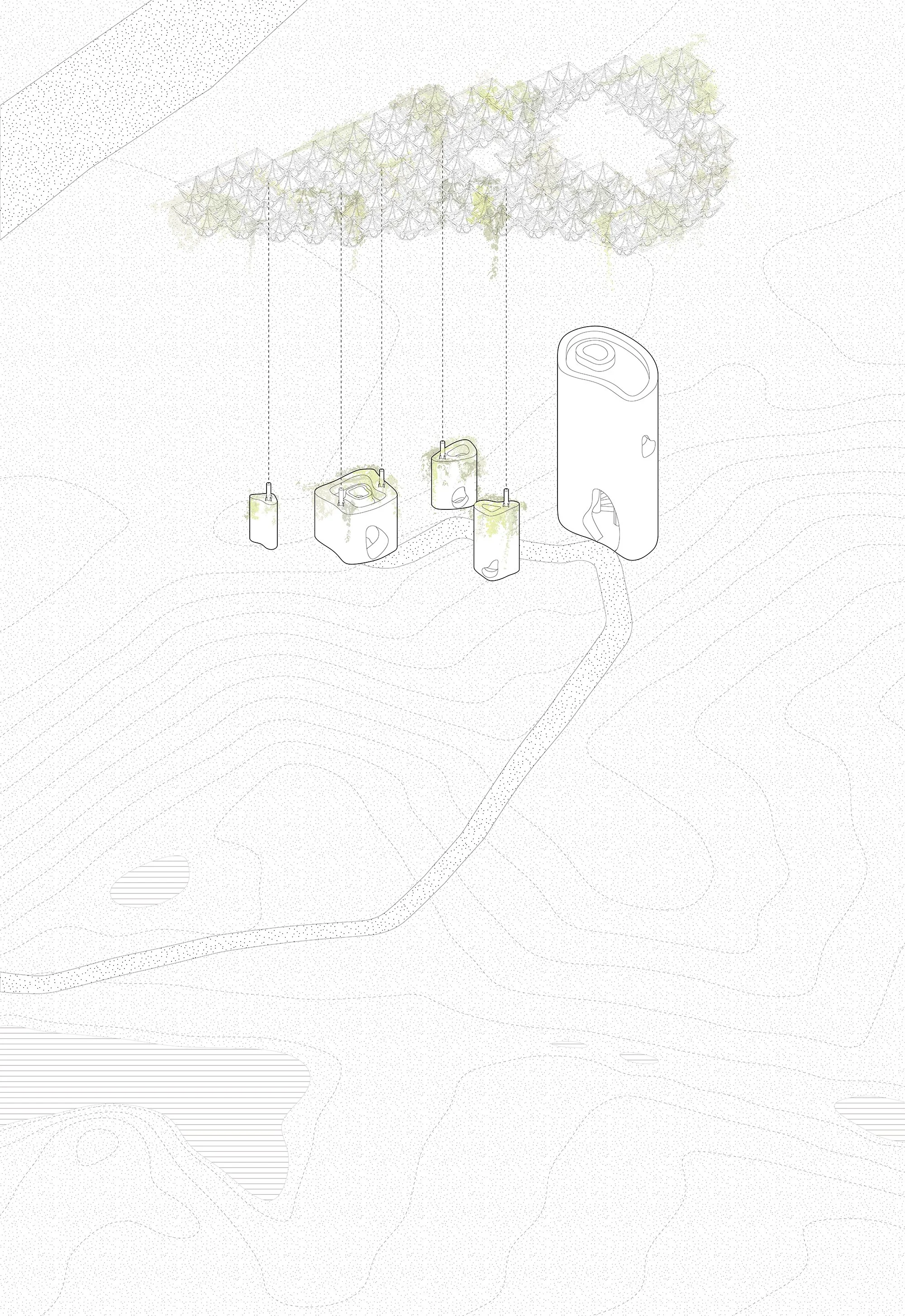
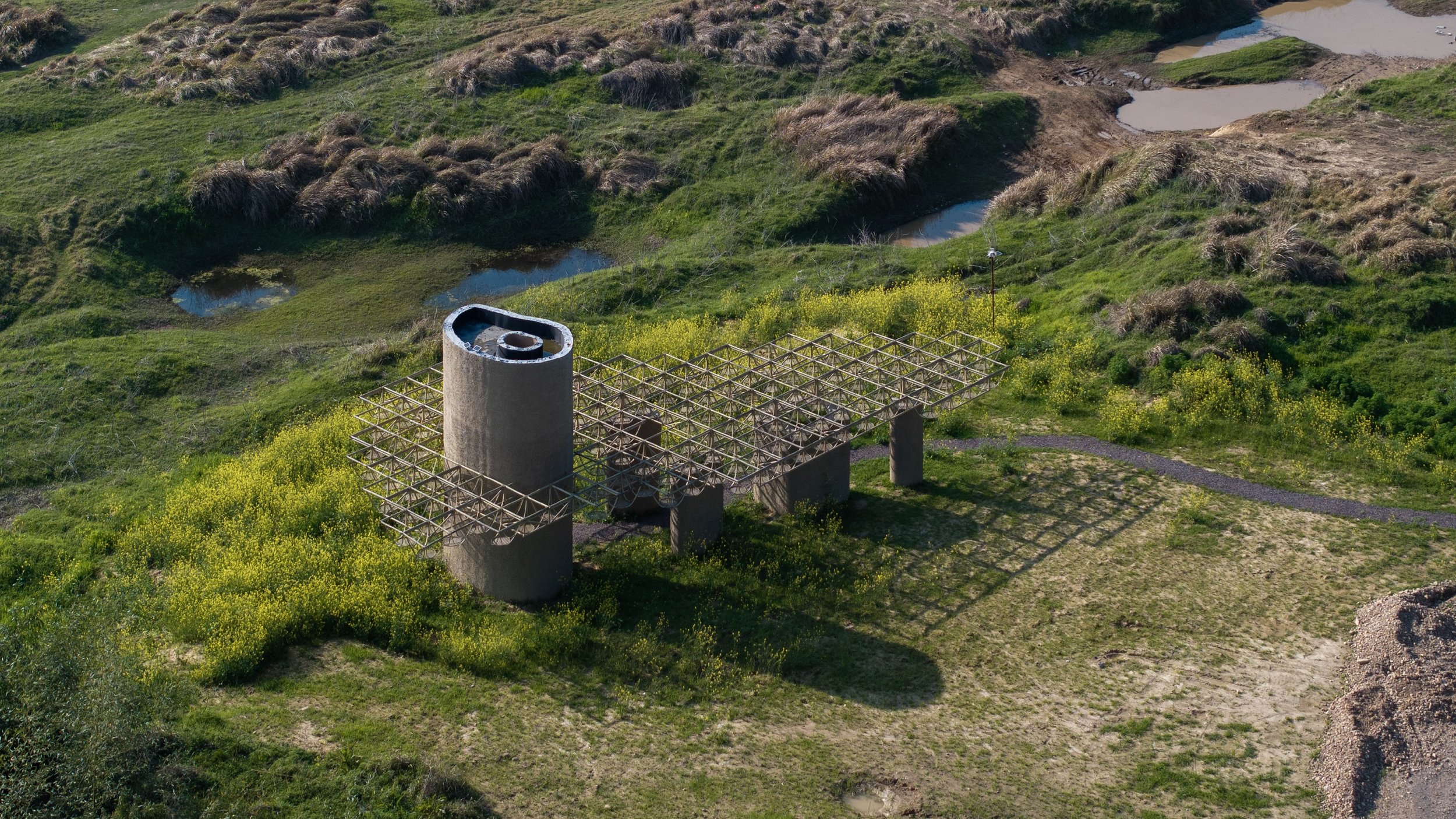
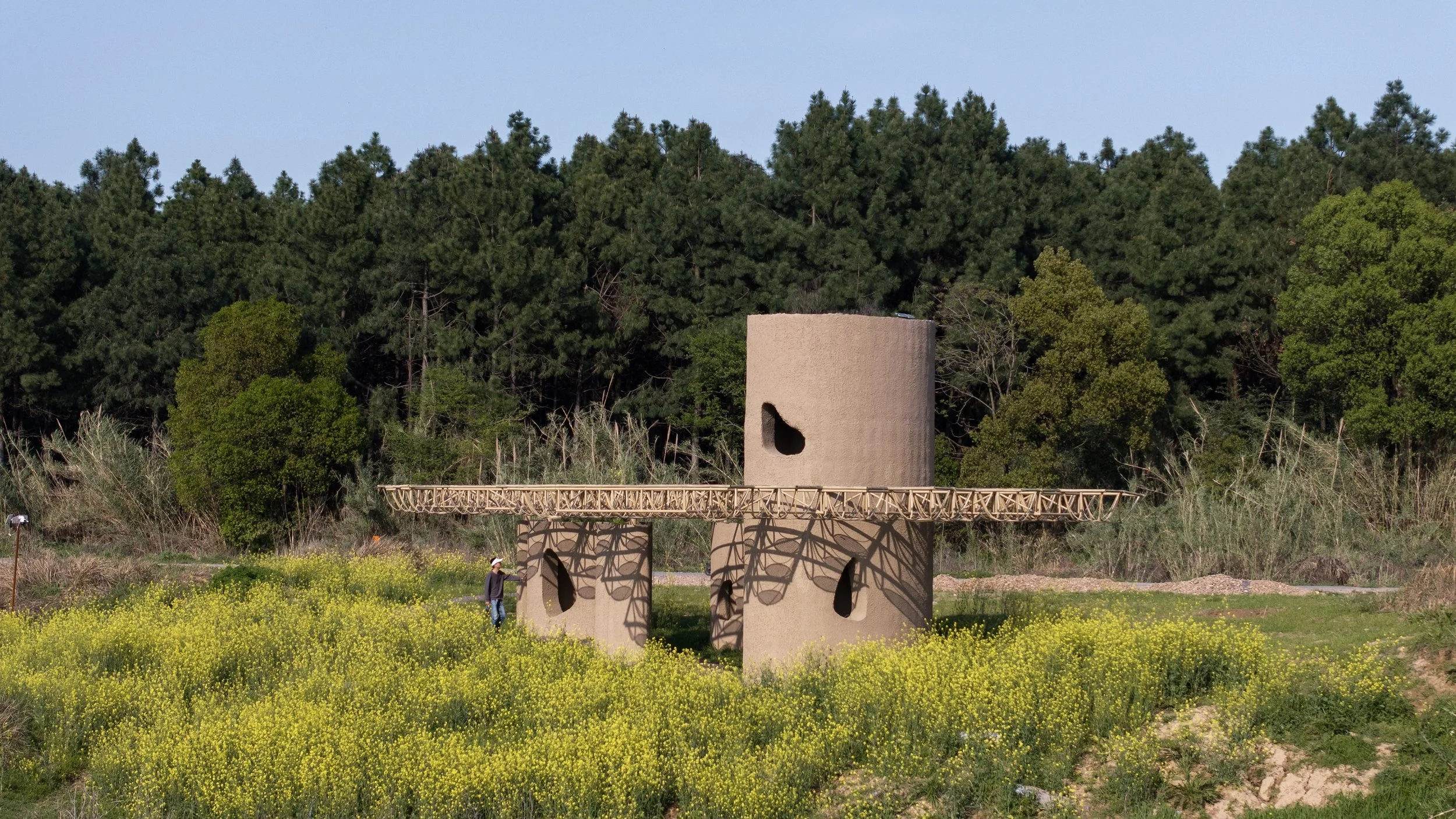
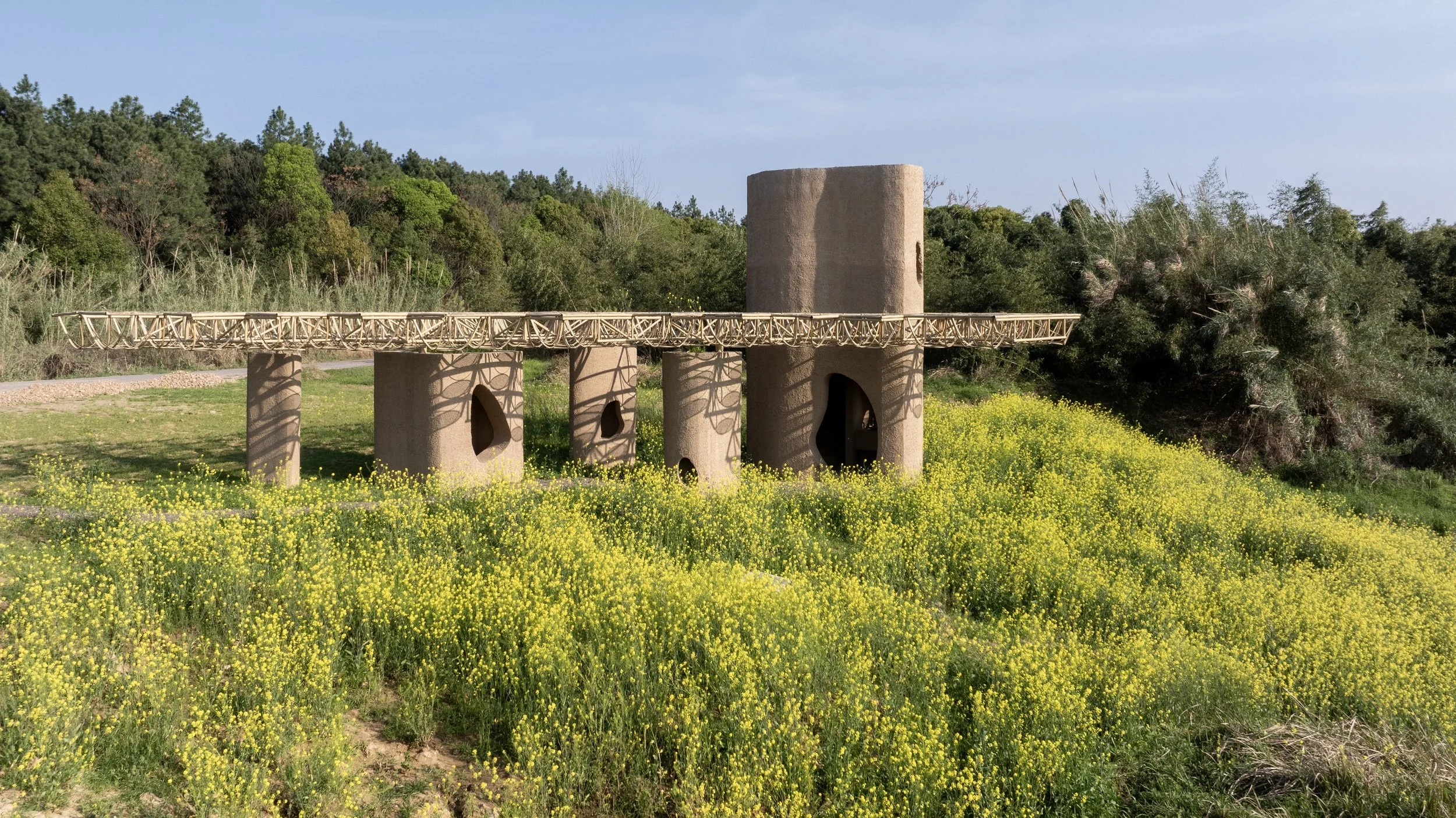
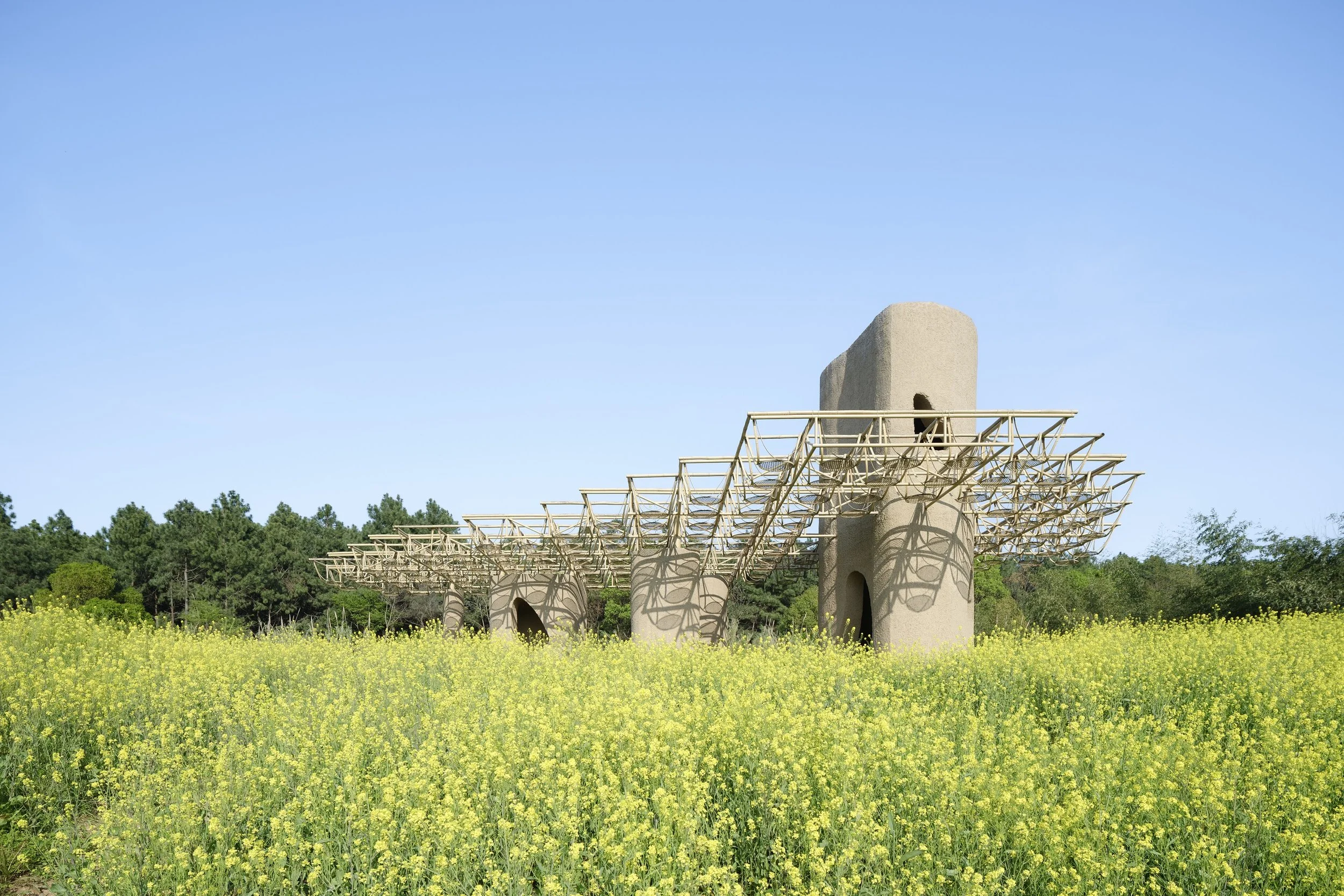
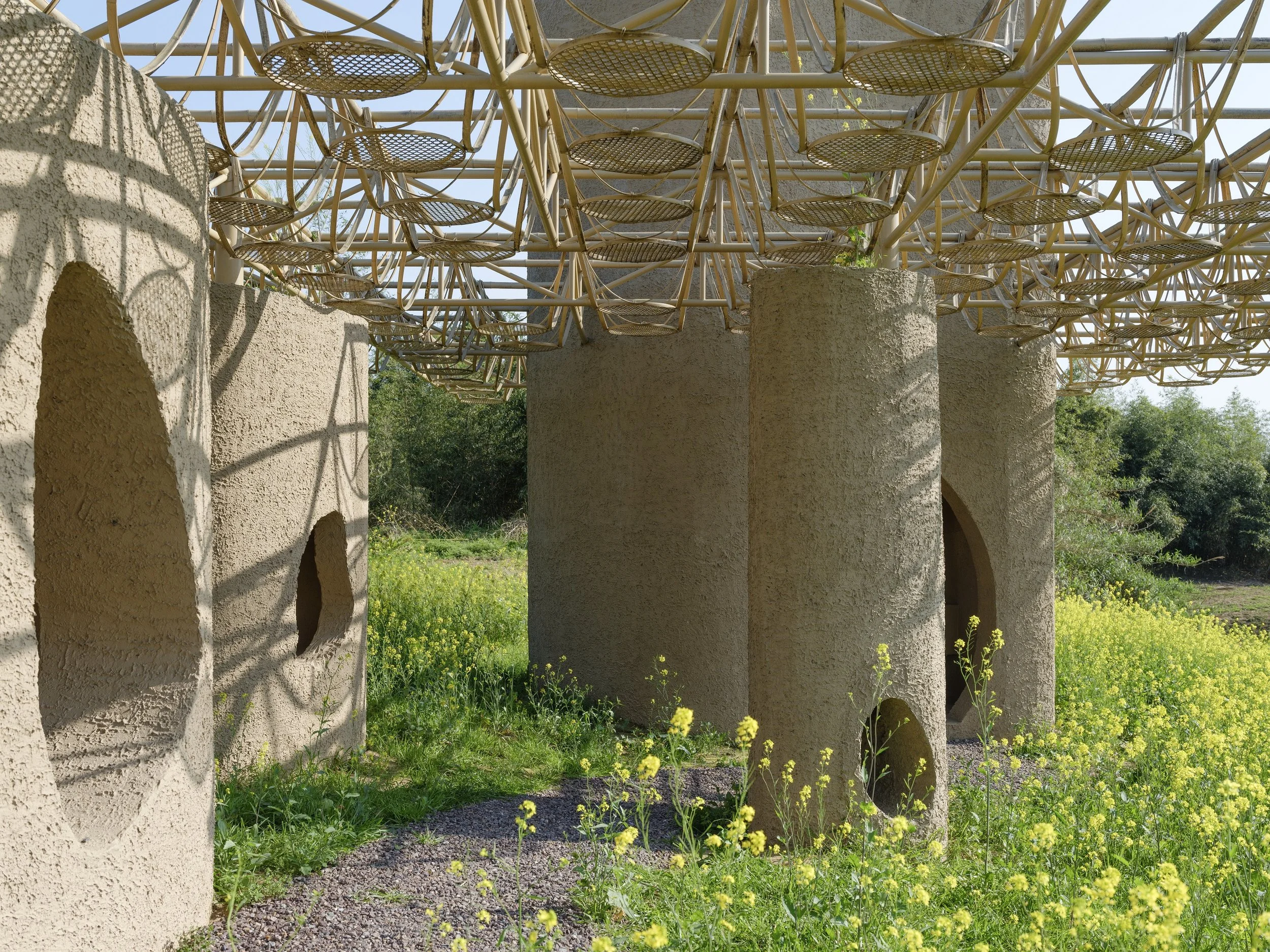
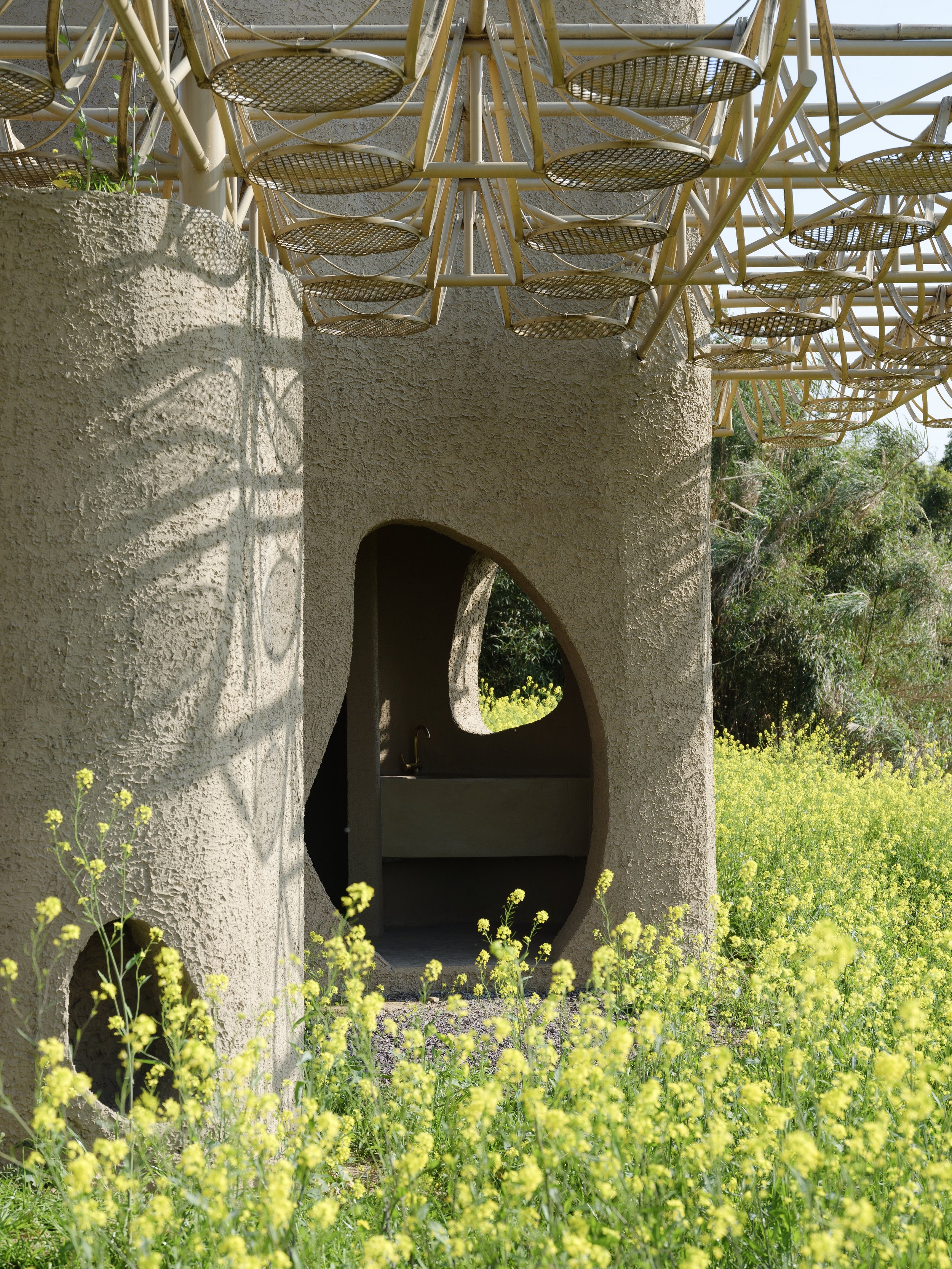
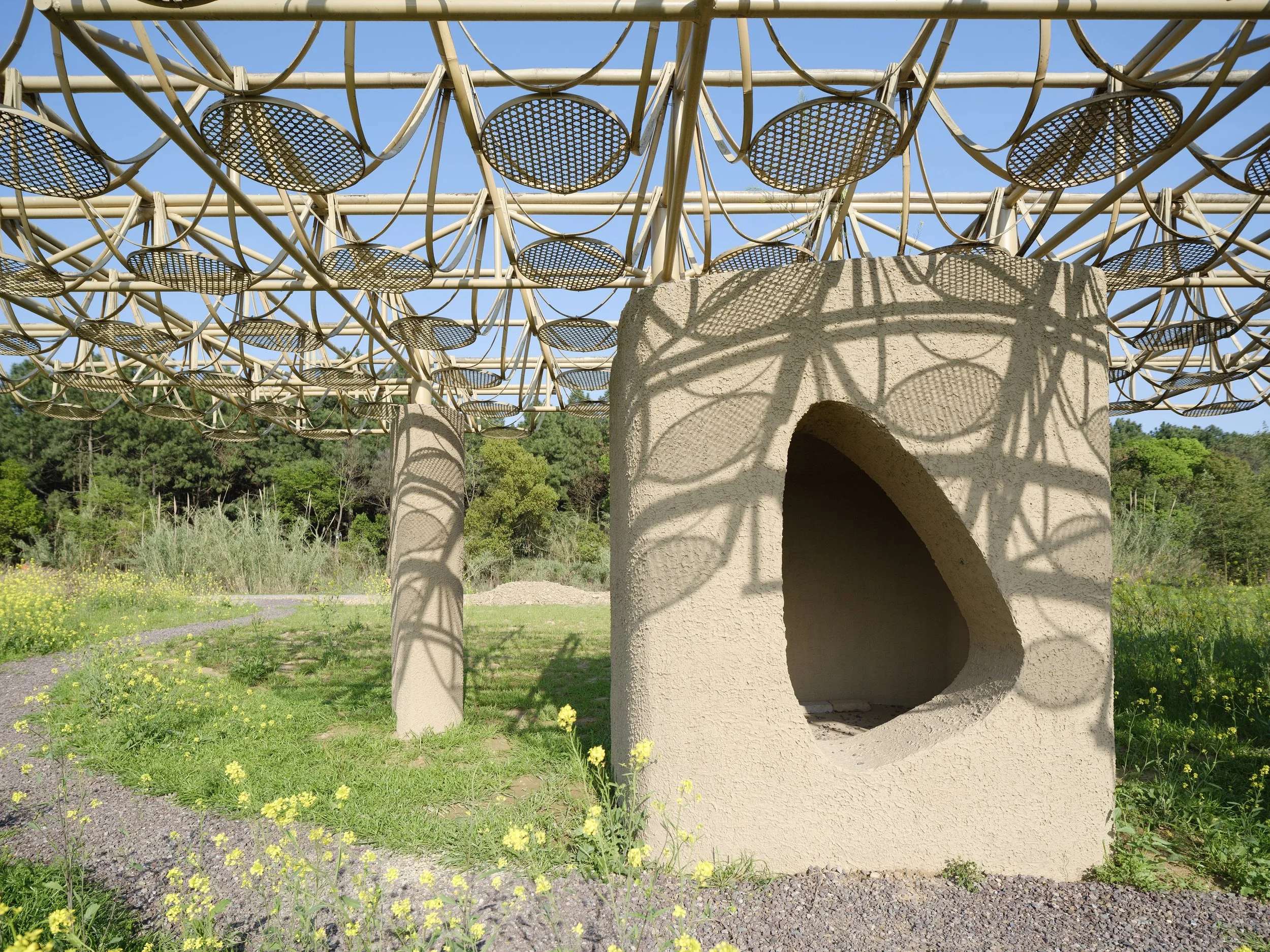
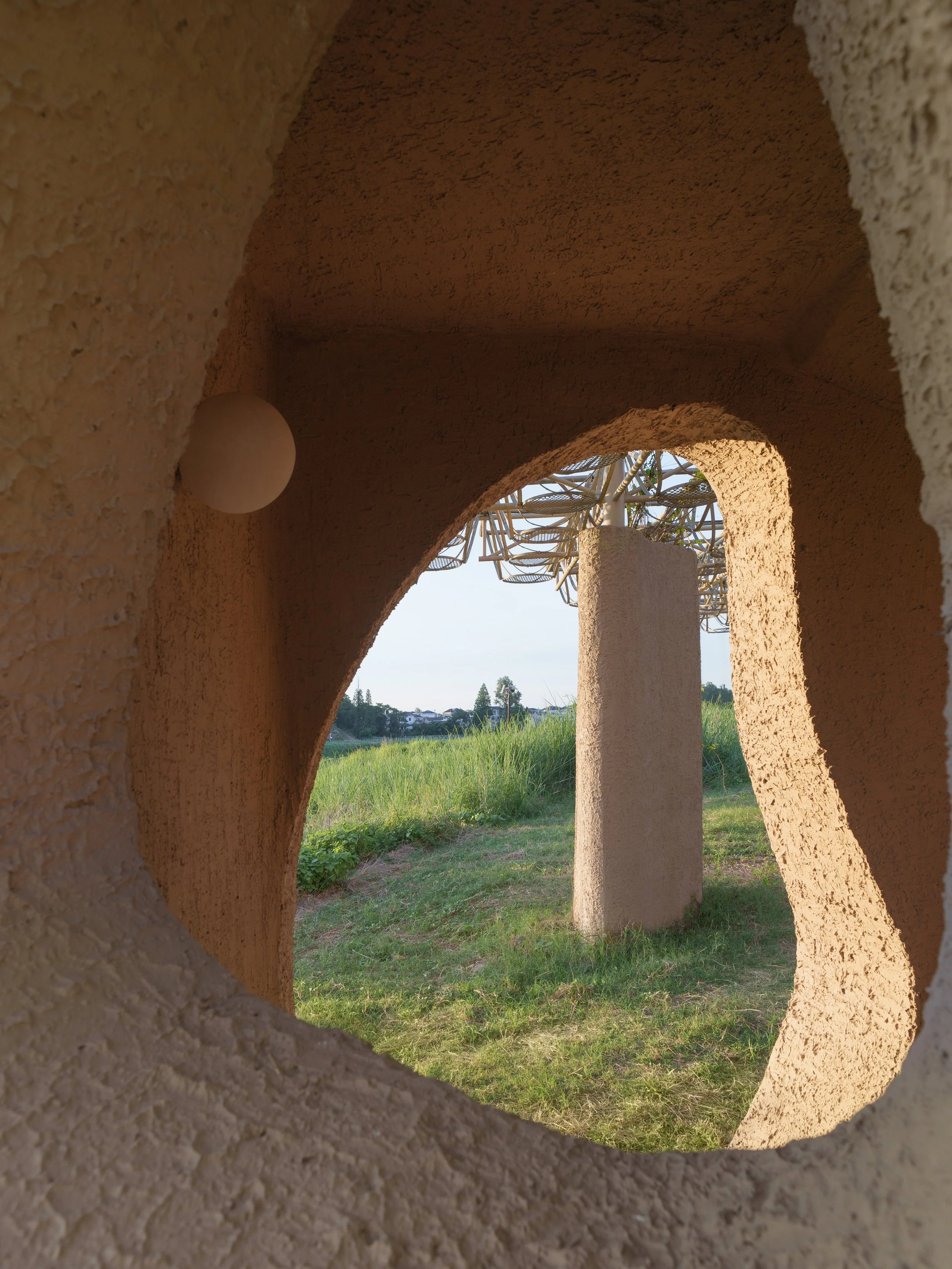
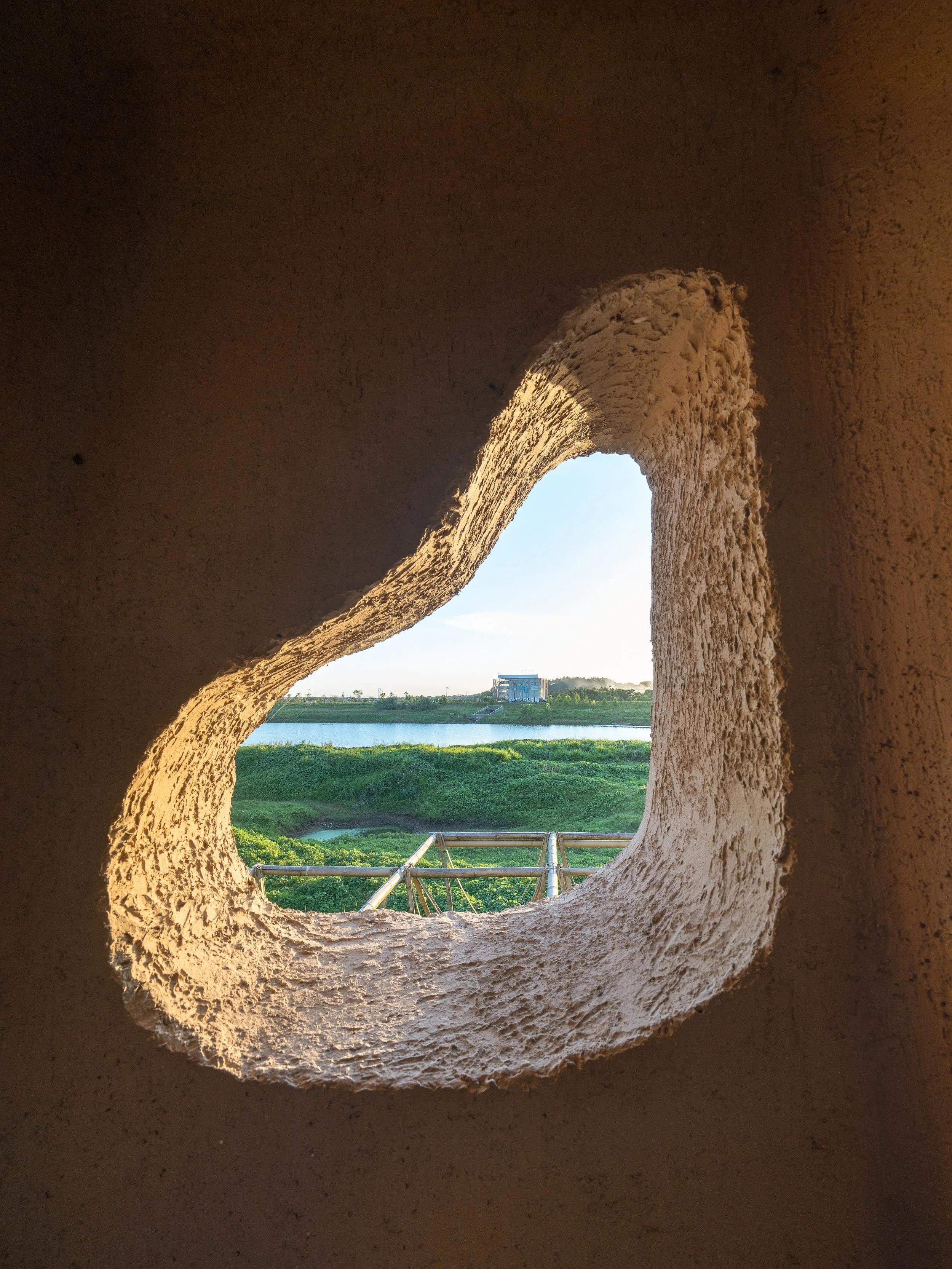
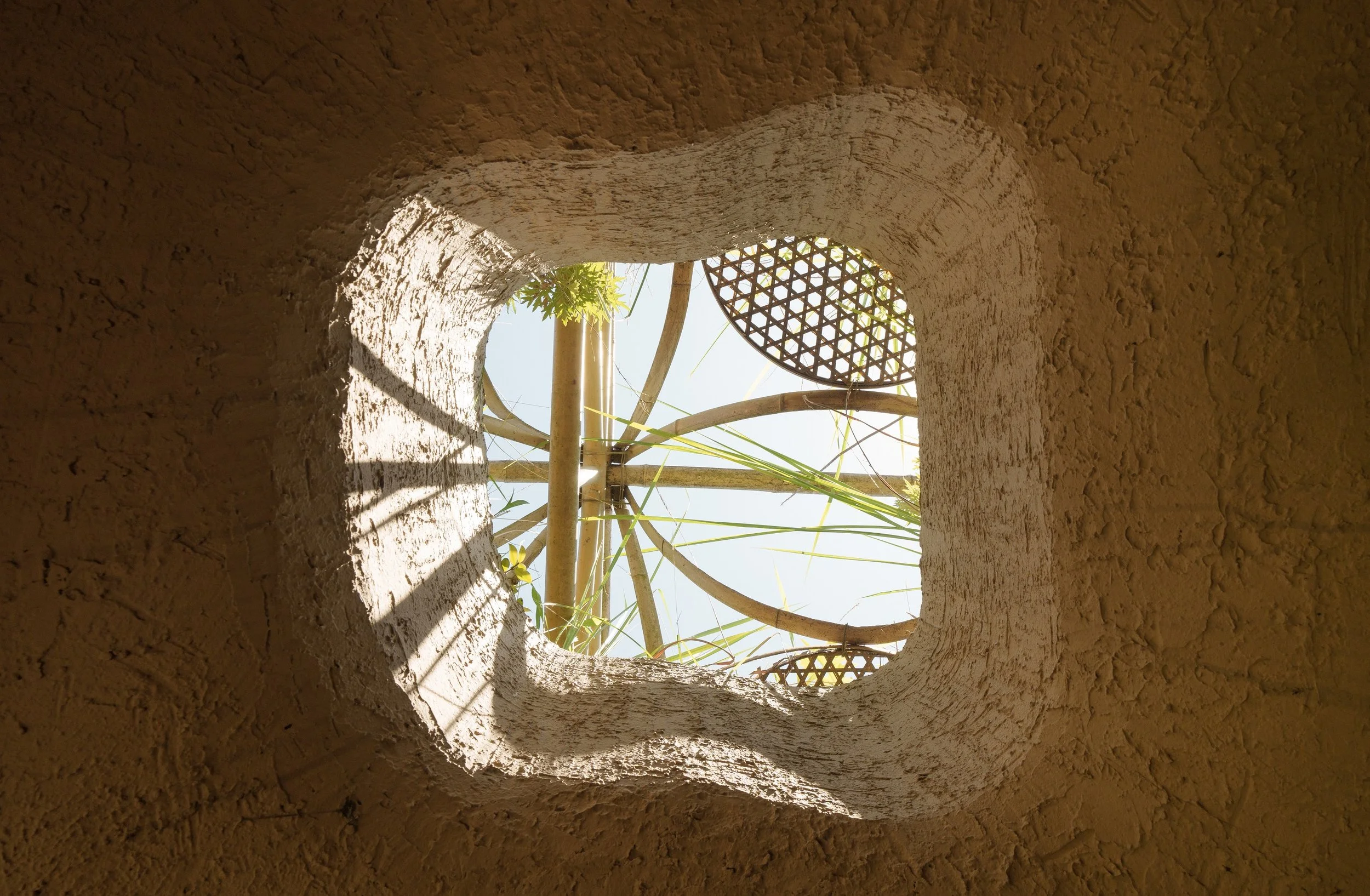
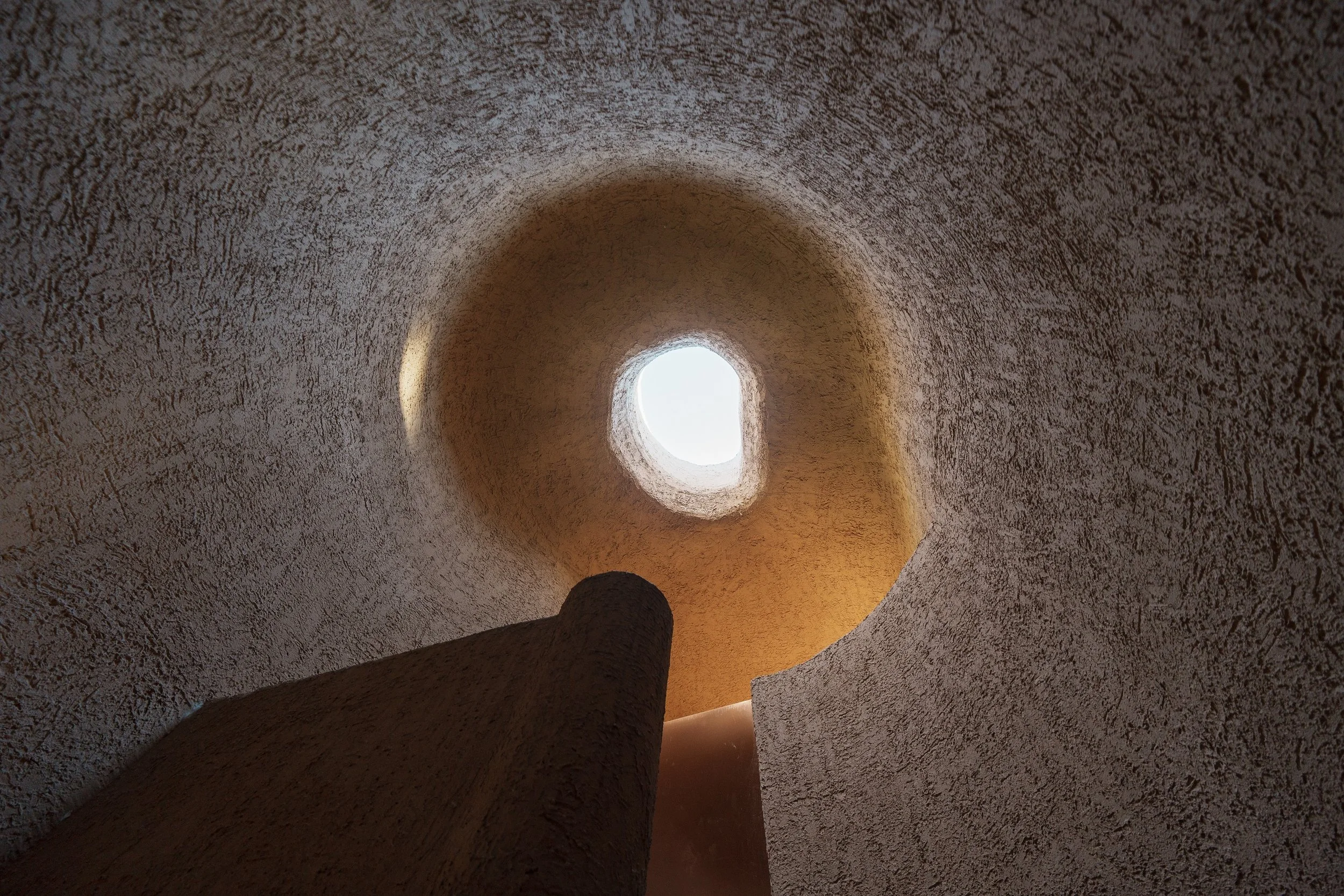
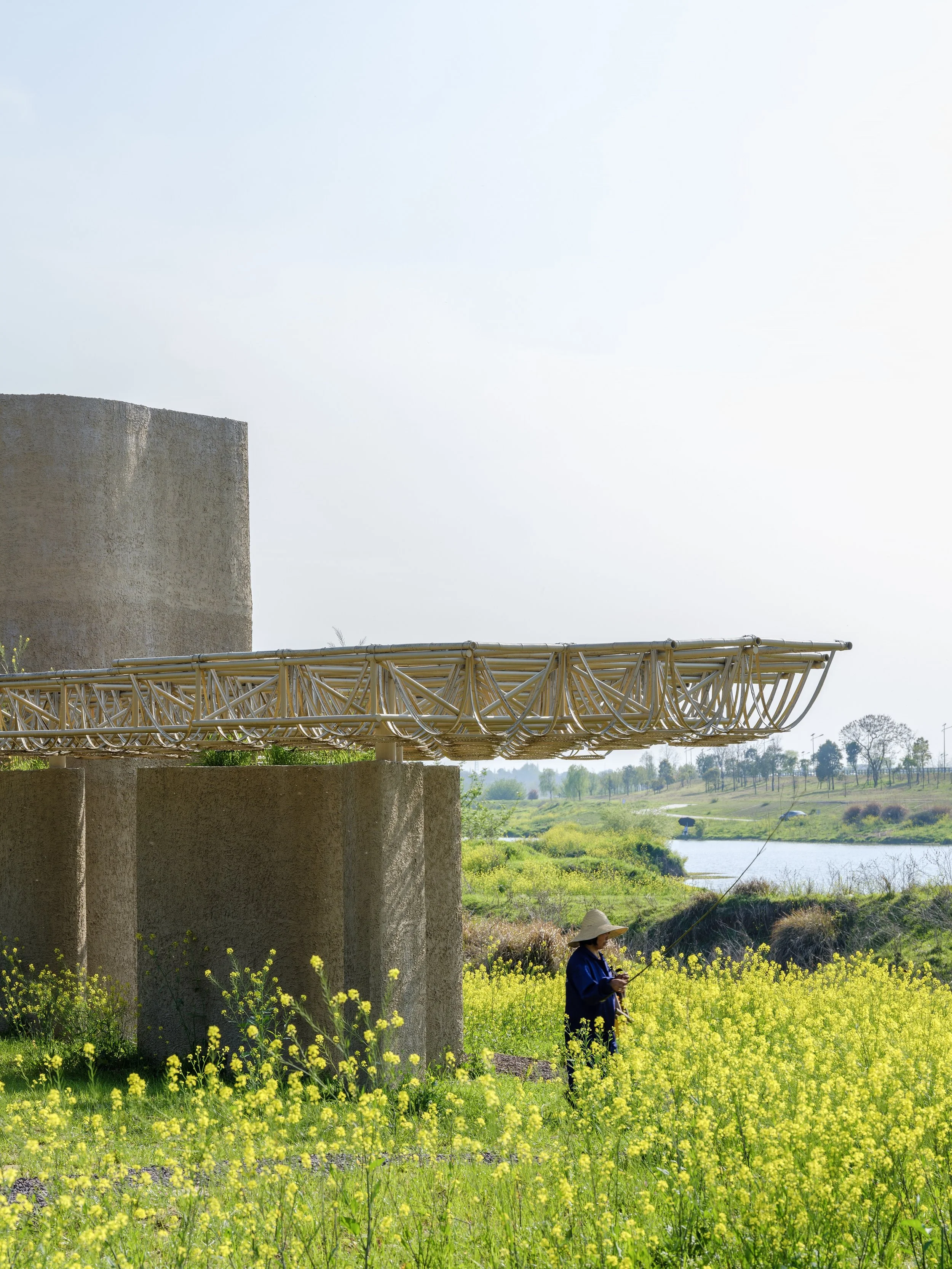
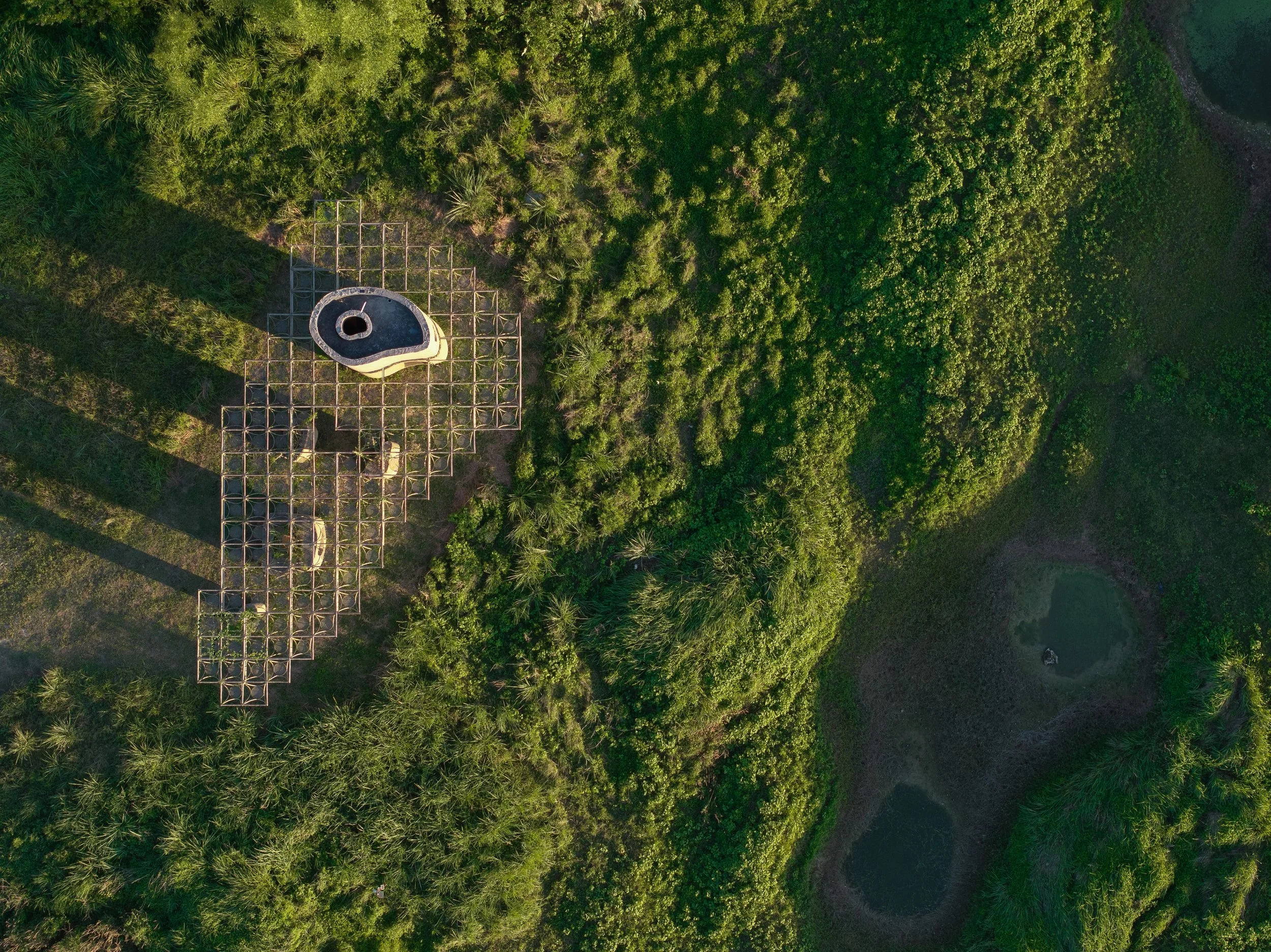
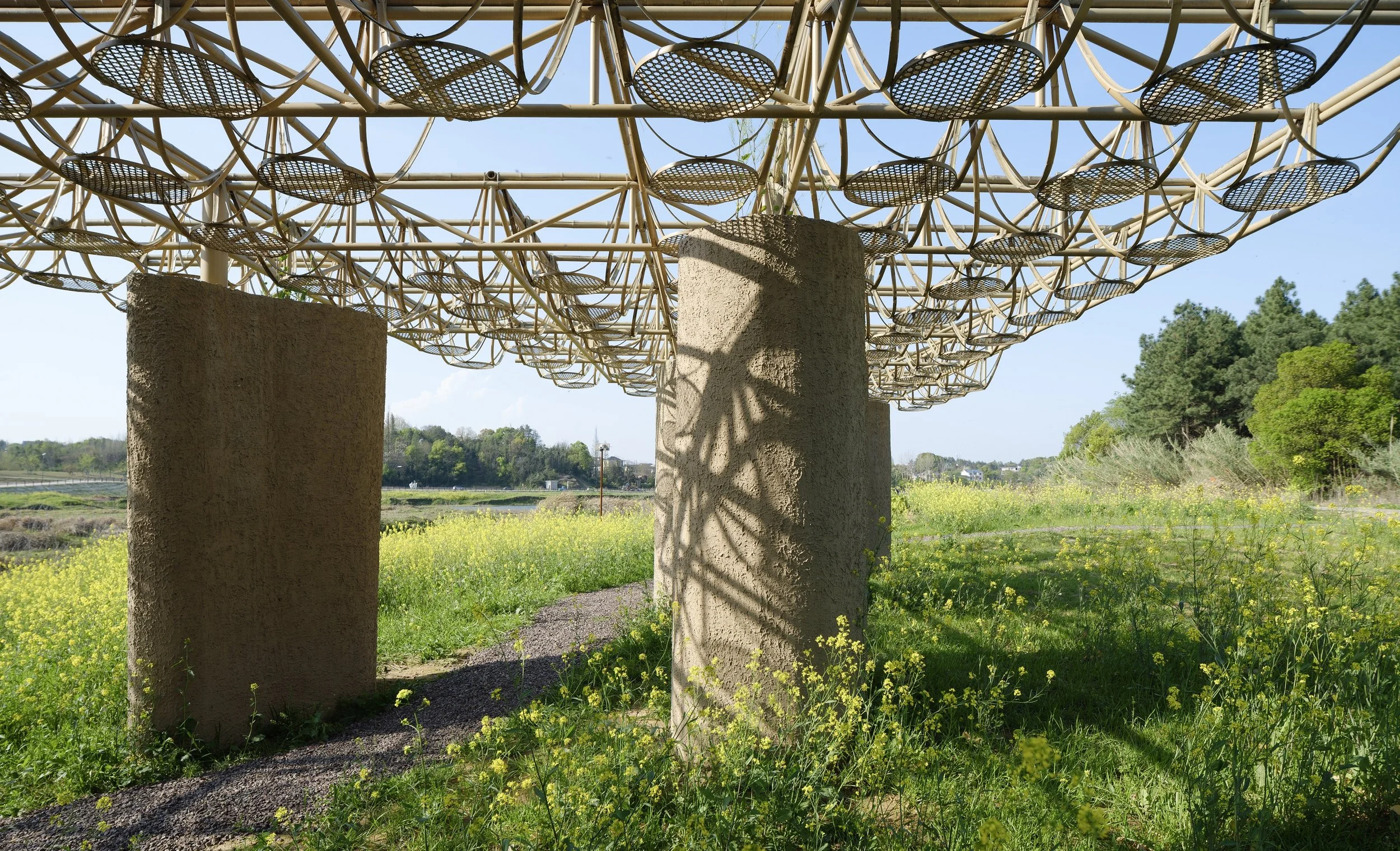
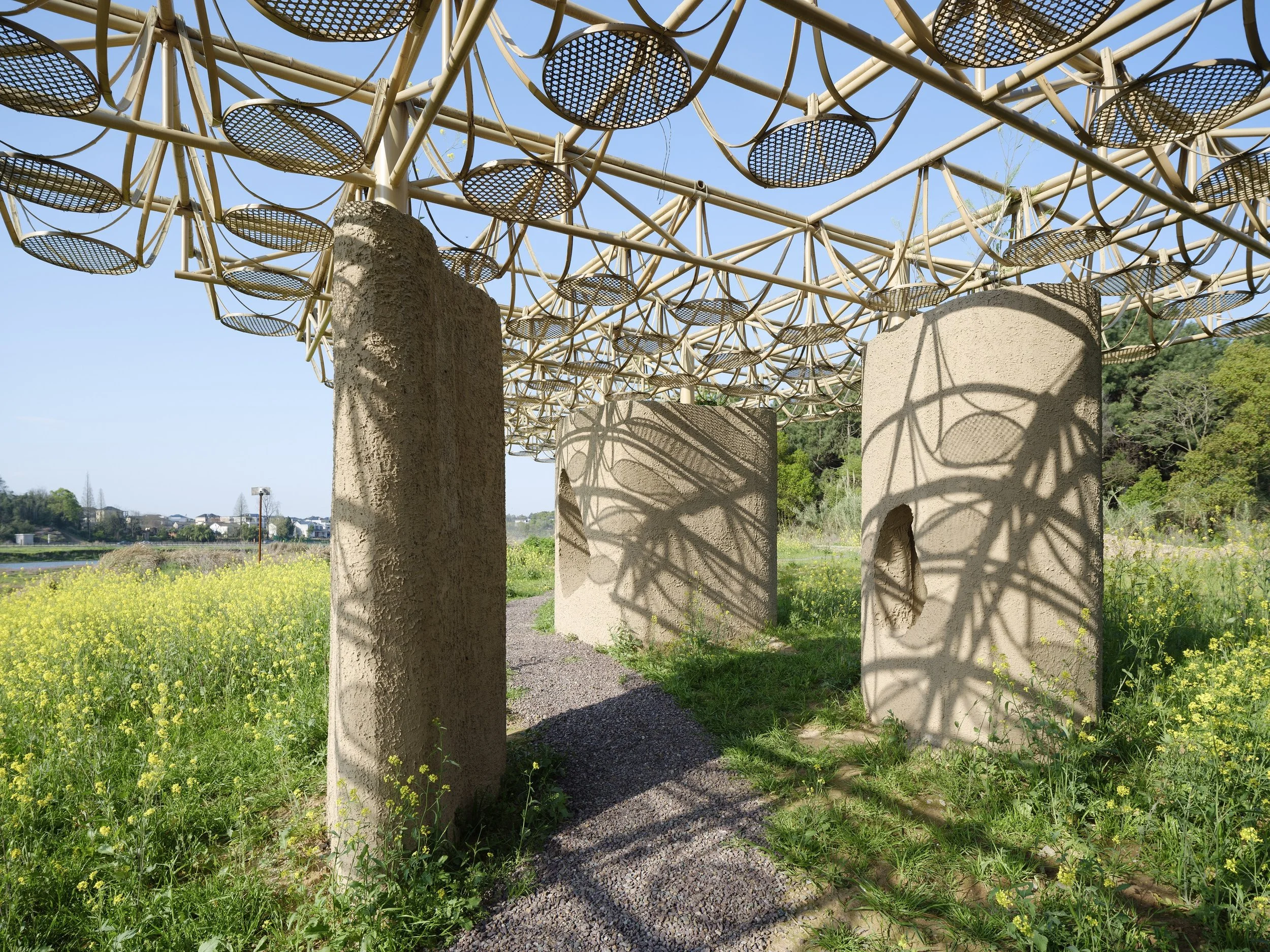
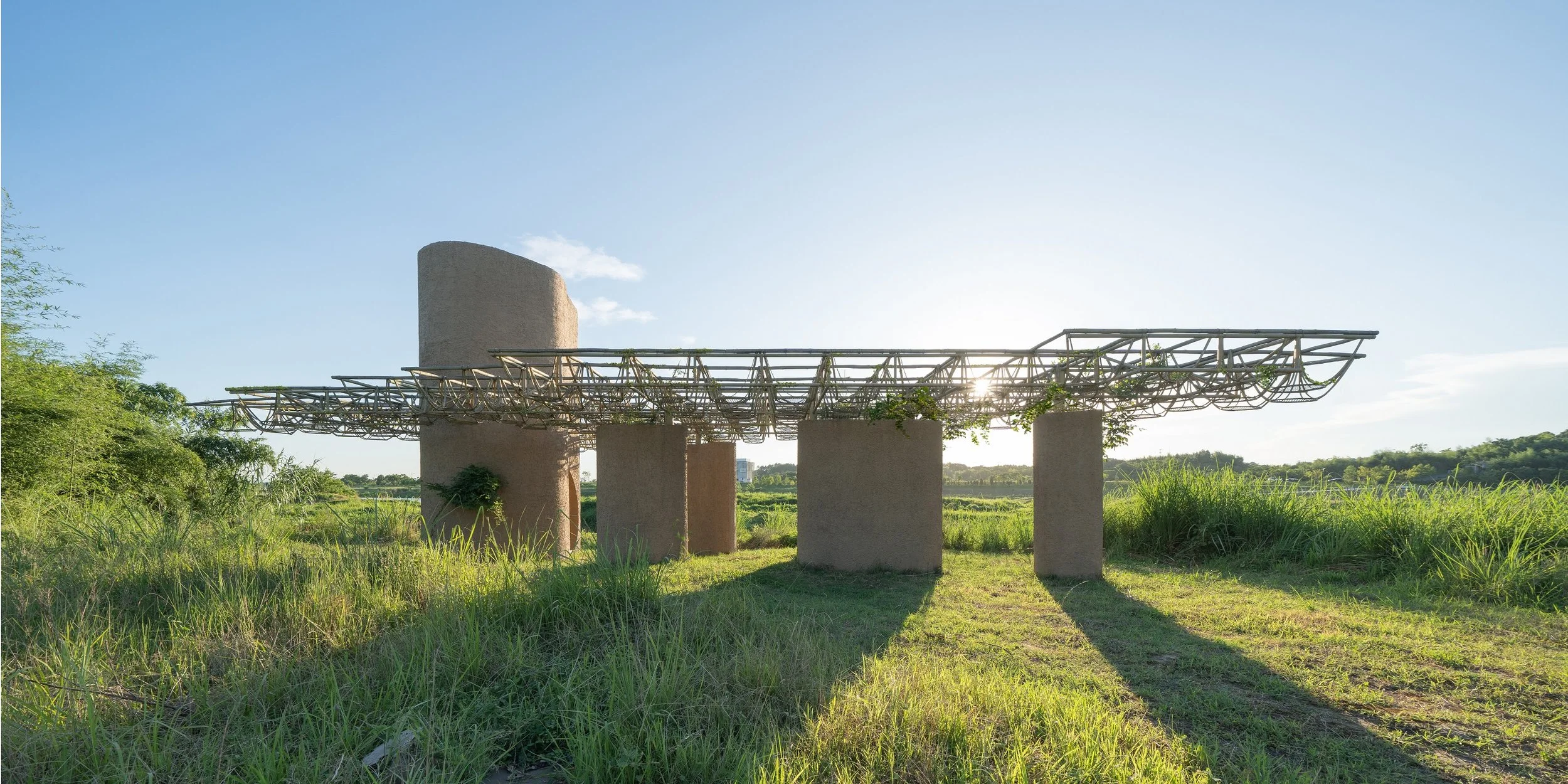
The vertical structure of the abstract artificial cave is formed by a series of scattered concrete pillars inspired by ancient cave columns and wetland waterholes. This approach anchors the structure to the dynamic wetland landscape with minimal intervention. Some of the concrete pillars are hollowed out to house functions such as trash collection, water supply, birdhouses, and observation points. These "voids" expand freely inside the pillars, sometimes penetrating the thick concrete walls to create skylights, side windows, and openings for natural ventilation, lighting, and scenic views.
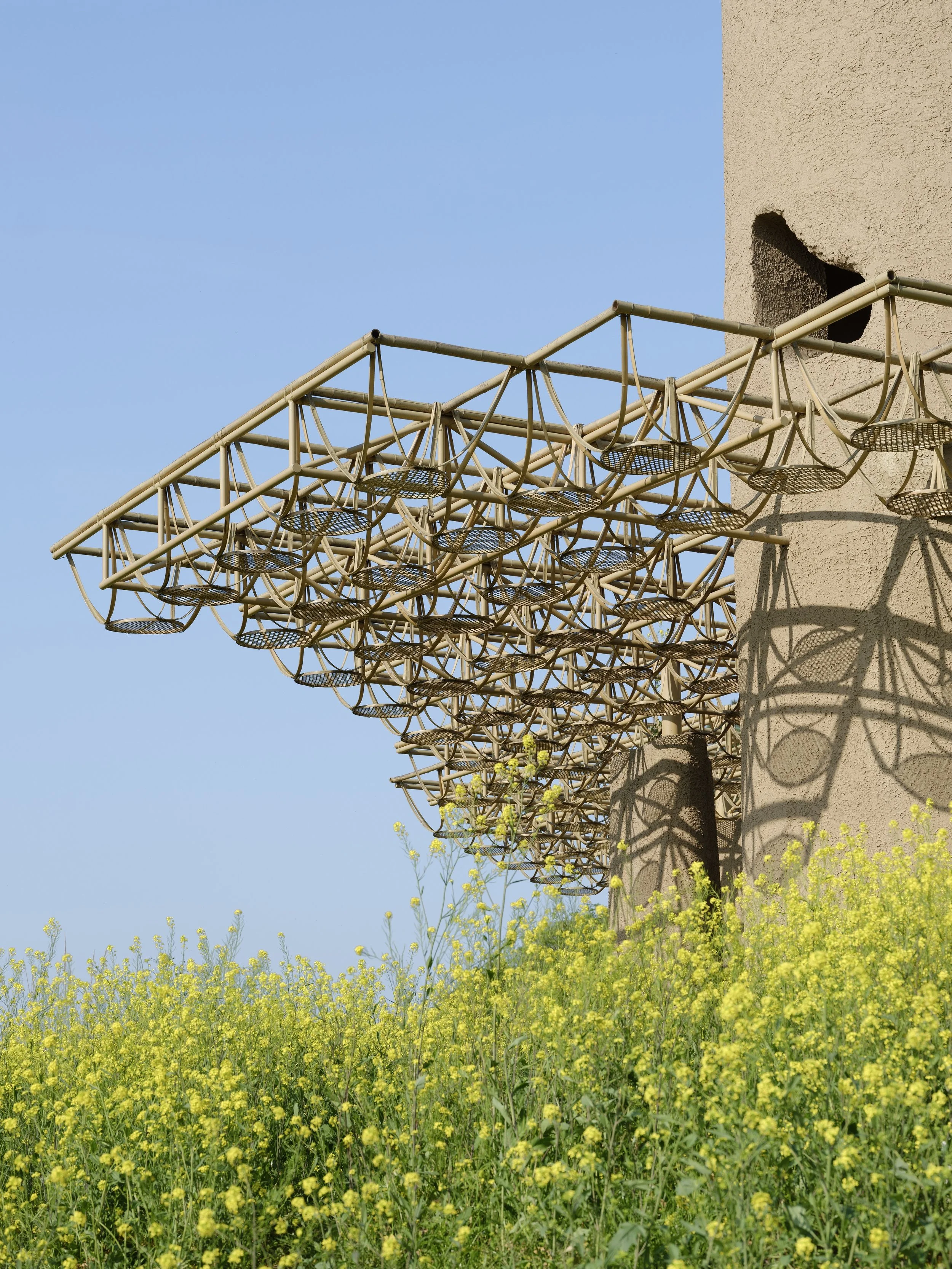
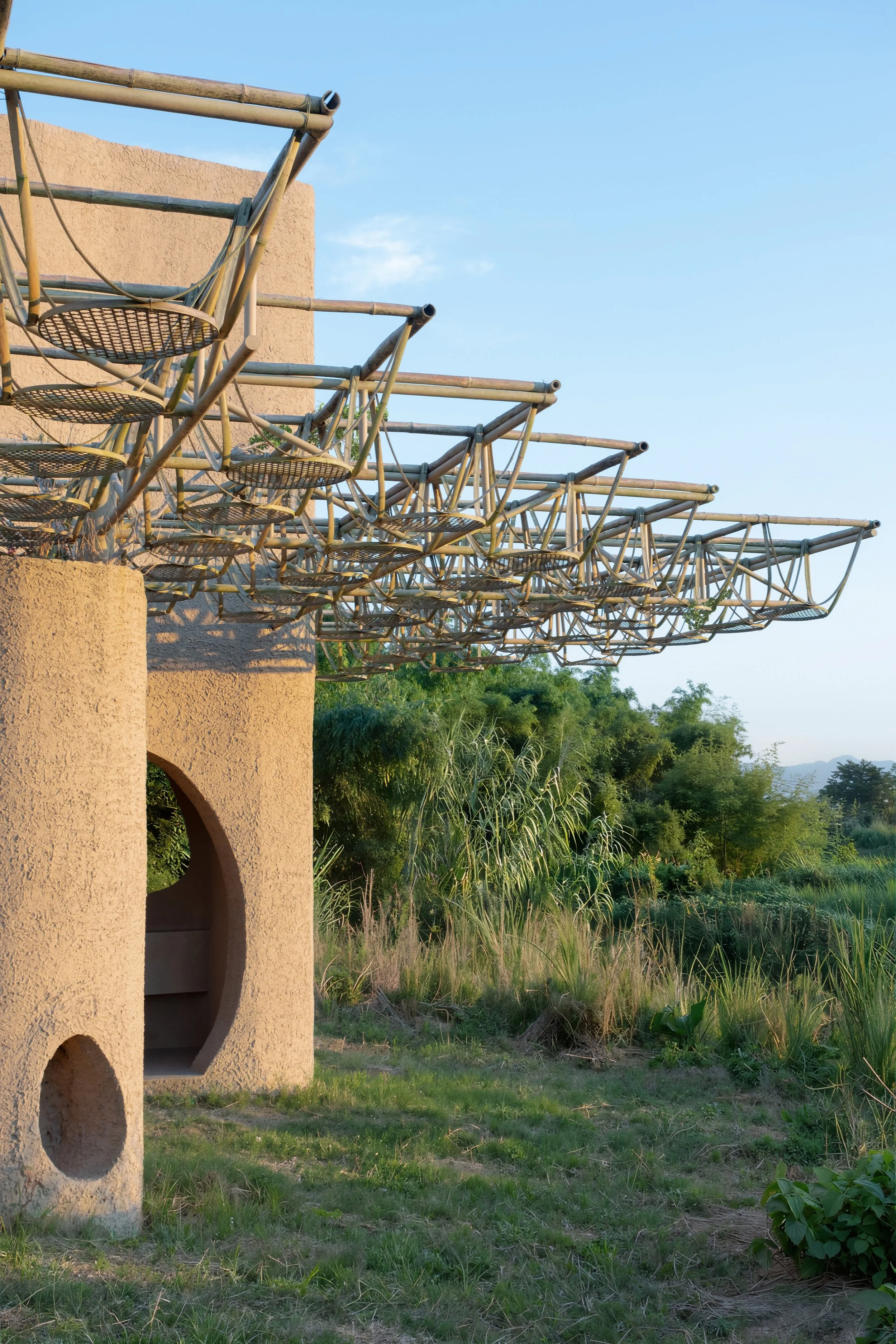
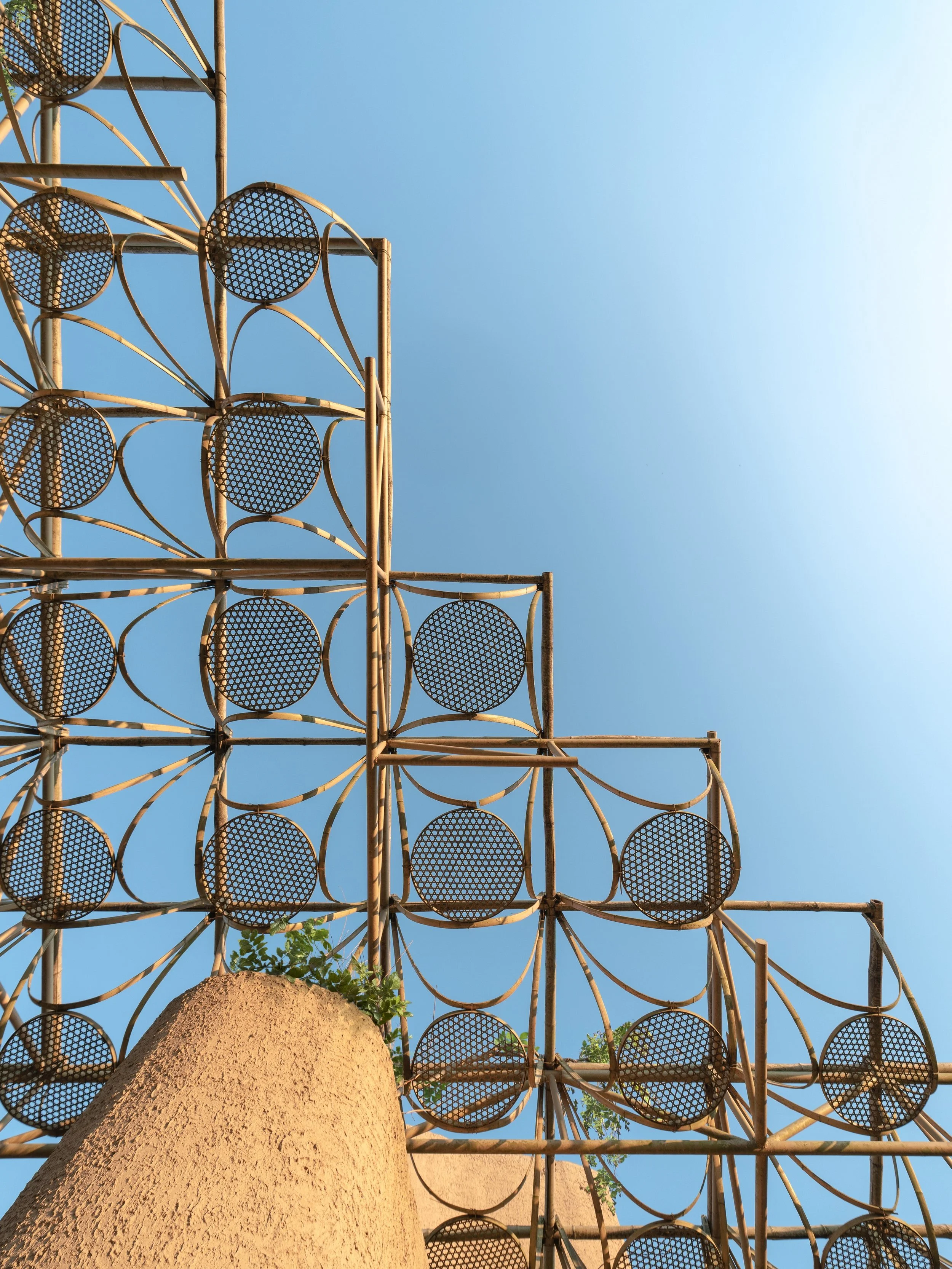
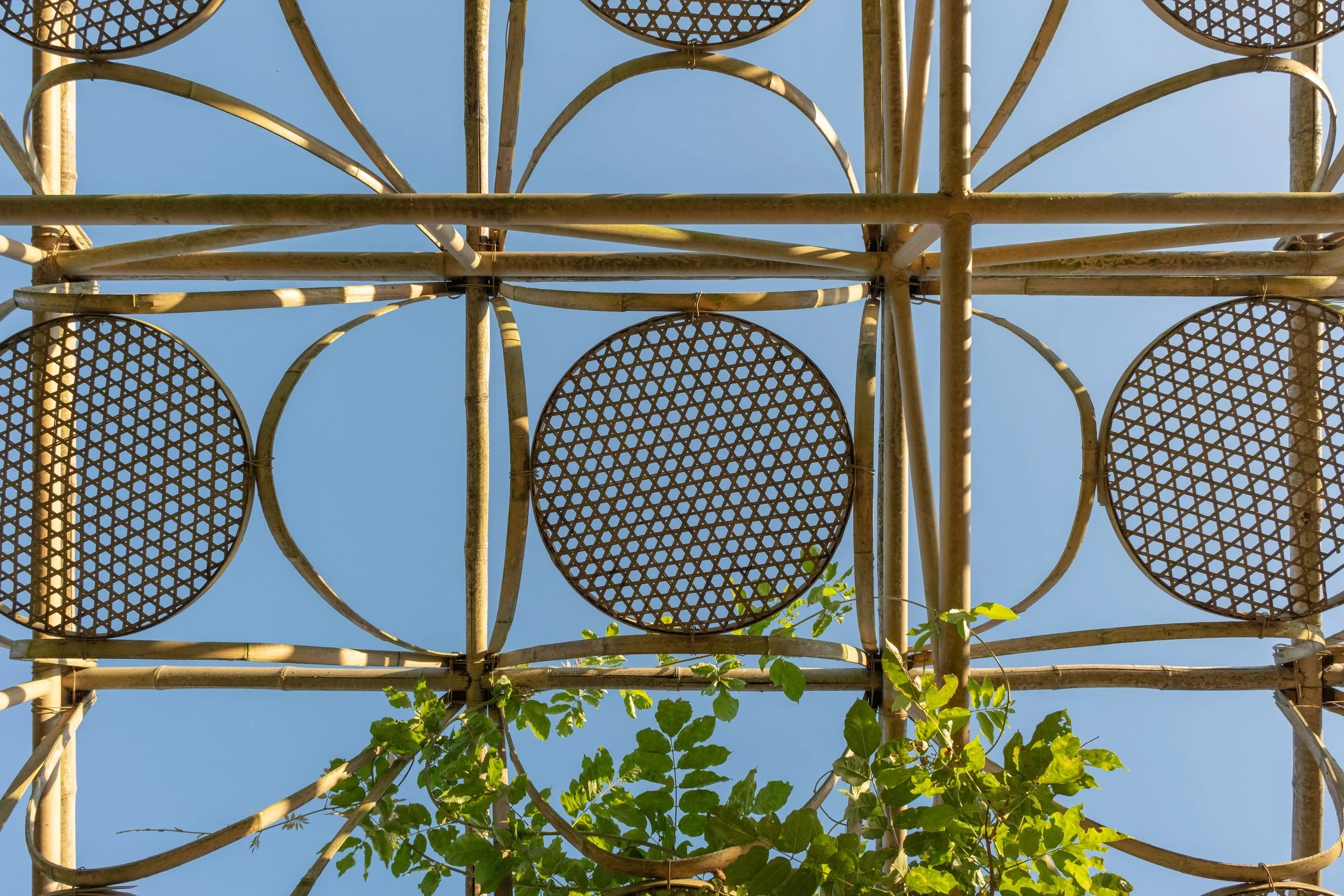
The concrete pillars support prefabricated light steel bamboo roofs, with the modular bamboo grid system inspired by local handmade bamboo crafts. The bamboo is sourced from nearby forests. Planters are concealed at the top of the concrete pillars, allowing low-maintenance native climbing plants to grow along the bamboo grid, providing shade and integrating the structure into the lush wetland environment.
The nearby ancient cave sites feature surfaces shaped by both manual excavation and natural weathering, creating unique textures. The custom materials and colors of the pavilion's concrete structure respond to these textures, recording and highlighting the delicate interaction between natural and human-made environments. Visitors can experience the dynamic balance of water, soil, flora, fauna, and cultural heritage in the wetlands, resulting in a space that balances human-made and natural elements, while providing a public area for rest, interaction, and observation.
湿地洞窟配套驿站坐落于衢州市龙游县小南海镇段船厂岛的水岸边,衢江顺流而下长期冲刷、沉积,塑造了场地周边独特的湿地地貌,孕育了丰富的动植物生态;岸边延绵的滩涂草甸为体验湿地天然的地貌和生态环境提供了丰富多样的场地条件,沿岸散布着大大小小的人工洞窟遗址则是人造物与自然的有机融合,历史悠久且充满神秘感,令人着迷。
项目场地位于河流与岛屿间的缓冲区,每年汛期被洪水淹没,又在退水过程中水落石出,泥沙随着原来的地形再次沉积,地形起伏也随之改变,直至稳定并重新被植被覆盖,形成新的湿地草甸地貌;这种周而复始的变化、作用与反作用的动态平衡充分展现了自然法则之精妙、严谨和诗意,令人着迷。在此循环往复中,湿地孕育了丰富的生态圈,植物多样茂密,野生和饲养的禽类、牲畜也在此觅食、嬉戏、栖息。
在此在水、陆转换的模糊地带中探索水土间持续变化的边界,我们塑造了一座抽象的人工洞窟,为周边的动植物提供一处栖息地,为放牧劳作的村民提供一处有水源的歇脚处,也为慕名而来的游客、露营爱好者提供一处观察、体验湿地的场所。
抽象人工洞窟的垂直结构由一组散布于湿地间的点状混凝土柱构成,其形式受到古石窟巨柱结构和湿地水洼形态启发,尝试以最少的介入方式将构筑物锚固于变化的水土地貌中。部分混凝土柱内被挖空并置入垃圾收集、洗手接水、禽舍、瞭望等基本功能;这些“空洞”在柱内自由扩展,时而穿实体透混凝土厚壁与外界连通,自然形成顶部天窗、侧壁窗洞,提供自然通风、采光和观景视角。
我们尝试对本地常见的材料进行创新使用,对形式和材料进行非正统处理。混凝土构件顶部承托有预制的轻钢竹结构顶棚, 模块化的竹网架系统材料来源于周边区域的竹林,其结构形式和工艺均受到当地常见的手工竹制品启发。在混凝土竖向构件顶部设有种植槽,可种植低维护的本地爬藤植物,并沿着竹网架模块在地块上方生长蔓延,为场地遮荫,也使构筑物更好地融入植被丰茂的湿地环境中。
周边古老的洞窟遗址内部石壁、石柱表面由人工开凿和自然风化作用叠加,形成特殊的机理,洞窟驿站的混凝土构件定制的材料色彩、质感对此做出回应,记录并提示人们感受自然和人造物之间微妙而密切的互动关系,体会湿地不断变化的水土、动植物等自然环境和历史悠久且丰富的人文环境,形成一处平衡人工构建和自然的场所,也为湿地提供一处休憩、体验、感受、互动的公共空间。